Posts in category 'platonic'
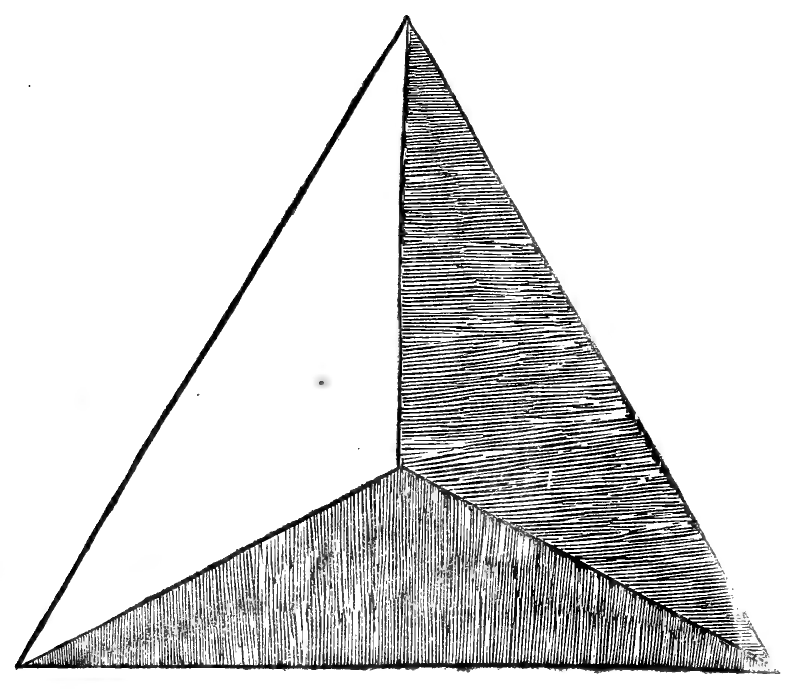
Tabulae I–II: Tetrahedron Planum Solidum et Vacuum (1509)
To illustrate Luca Pacioli’s De Divina Proportione (1509), Leonardo da Vinci constructed the regular tetrahedron \(\{3, 3\}\) in two foundational aspects: Tabula I (Folio 0187) as an opaque solid body with directional shading (Planum Solidum), and Tabula II (Folio 0189) as an open mitered wooden lattice (Planum Vacuum). Through the Vacuate Manifold Theorem, hollowing the four triangular faces produces a closed orientable 2-manifold of topological genus \(g = F - 1 = 3\).
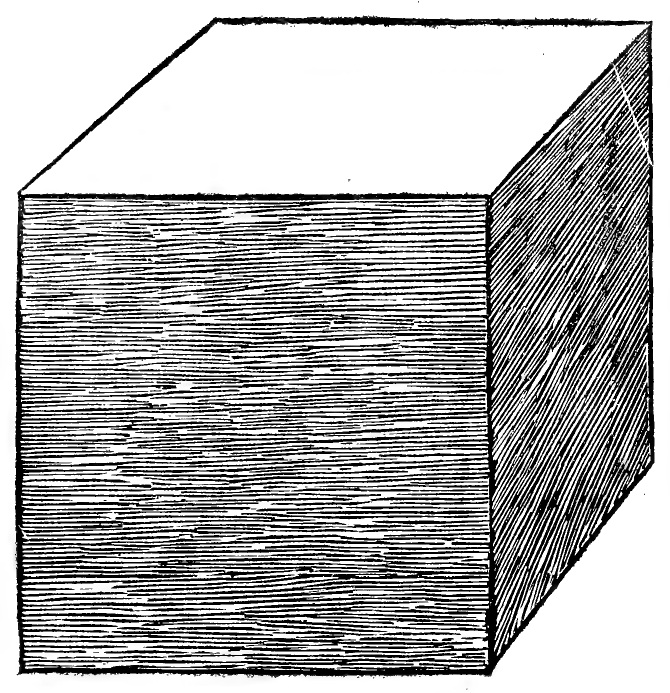
Tabulae VII–VIII: Exahedron Planum Solidum et Vacuum (1509)
The regular hexahedron (cube) \(\{4, 3\}\) possesses 8 vertices, 12 edges, and 6 square faces. Leonardo da Vinci illustrates this fundamental Platonic solid in Tabula VII (Folio 0199) as Exahedron sive Cubus Planum Solidum and in Tabula VIII (Folio 0201) as Exahedron Planum Vacuum. Hollowing the 6 square faces transforms the cube into a 2-manifold wooden framework of topological genus \(g = F - 1 = 5\).
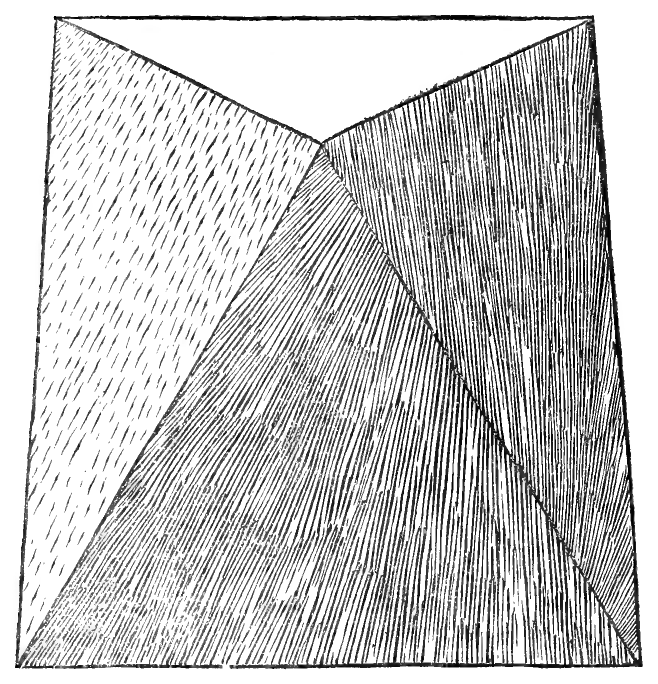
Tabulae XV–XVI: Octahedron Planum Solidum et Vacuum (1509)
The regular octahedron \(\{3, 4\}\) is the Platonic dual of the cube, possessing 6 vertices, 12 edges, and 8 equilateral triangular faces. Leonardo da Vinci illustrates this fundamental cosmic solid in Tabula XV (Folio 0219) as Octahedron Planum Solidum and in Tabula XVI (Folio 0221) as Octahedron Planum Vacuum. In hollow form, the eight open triangular apertures create a wooden framework of topological genus \(g = F - 1 = 7\).
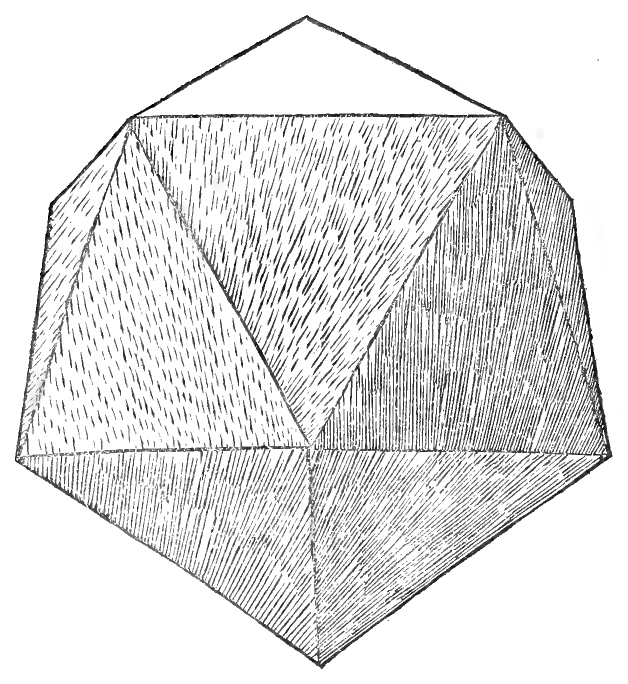
Tabulae XXI–XXII: Icosahedron Planum Solidum et Vacuum (1509)
The regular icosahedron \(\{3, 5\}\) is composed of 20 equilateral triangular faces, 30 edges, and 12 vertices defined by three mutually perpendicular golden rectangles over \(\mathbb{Q}(\phi)\). Leonardo da Vinci illustrates this Platonic solid in Tabula XXI (Folio 0231) as Icosahedron Planum Solidum and in Tabula XXII (Folio 0233) as Icosahedron Planum Vacuum. In vacuate form, the 20 triangular window apertures form a wooden framework of topological genus \(g = F - 1 = 19\), the highest among the five Platonic solids.
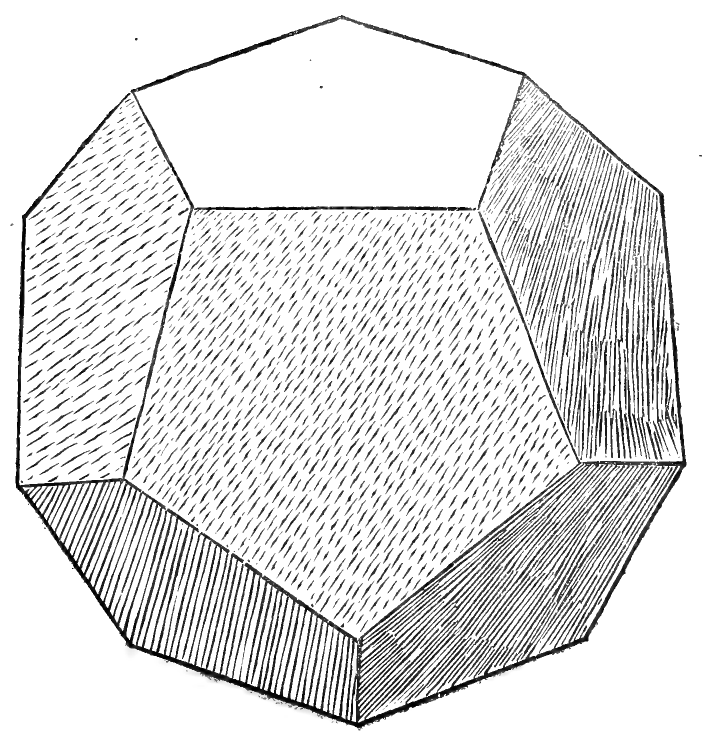
Tabulae XXVII–XXVIII: Dodecahedron Planum Solidum et Vacuum (1509)
The regular dodecahedron \(\{5, 3\}\) possesses 20 vertices, 30 edges, and 12 regular pentagonal faces governed by the divine proportion \(\phi\). Leonardo da Vinci illustrates this celestial solid in Tabula XXVII (Folio 0243) as Dodecahedron Planum Solidum and in Tabula XXVIII (Folio 0245) as Dodecahedron Planum Vacuum. In hollow form, the twelve open pentagonal windows form a wooden carpentry cage of topological genus \(g = F - 1 = 11\).