Posts tagged 'archimedean-solids'
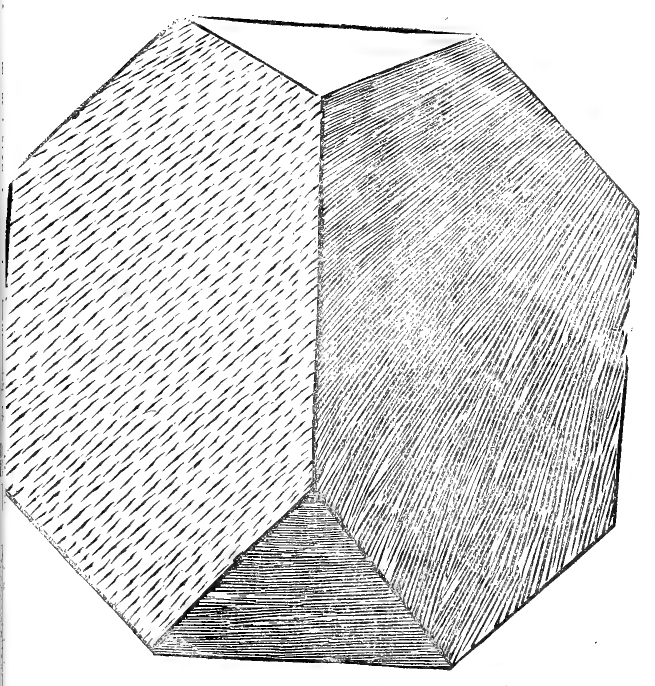
Tabulae III–IIII: Tetrahedron Abscisum Solidum et Vacuum (1509)
By truncating each of the 4 vertices of the regular tetrahedron at rational edge parameter \(t = 1/3\), the vertices are replaced by 4 equilateral triangular facets, while the 4 original triangles are truncated into 4 regular hexagons. Leonardo da Vinci illustrates the resulting Archimedean semi-regular solid in Tabula III (Folio 0191) as Tetrahedron Abscisum Solidum and in Tabula IIII (Folio 0193) as Tetrahedron Abscisum Vacuum (genus \(g = 7\)).
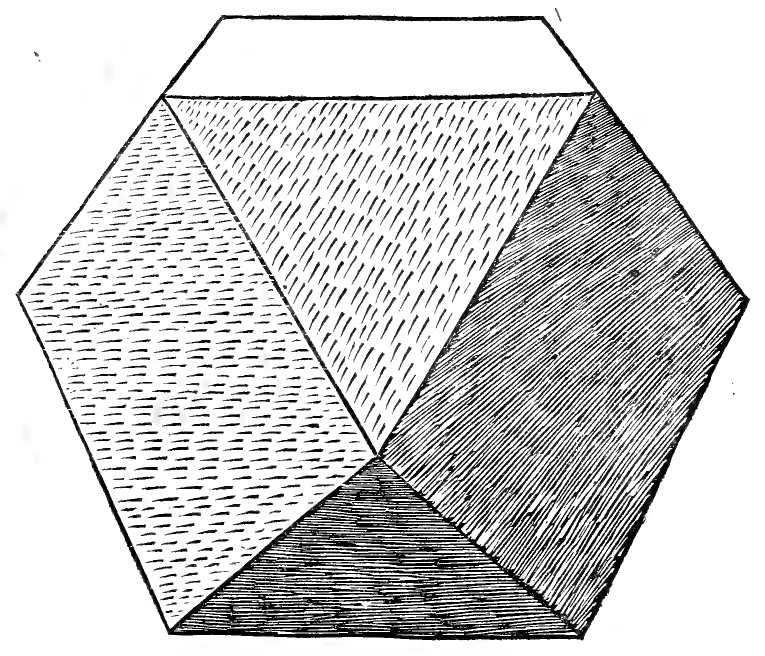
Tabulae VIIII–X: Exahedron Abscisum Solidum et Vacuum (1509)
By truncating the regular hexahedron (cube) at the exact midpoints of its twelve edges (Pacioli’s edge rectification), the 8 cube corners are replaced by 8 equilateral triangles, while the 6 square faces shrink into 6 rotated square facets. The resulting Archimedean semi-regular solid is the Cuboctahedron (\(V = 12, E = 24, F = 14\)), illustrated by Leonardo da Vinci in Tabula VIIII (Folio 0203) as Exahedron Abscisum Solidum and in Tabula X (Folio 0205) as Exahedron Abscisum Vacuum (genus \(g = 13\)).
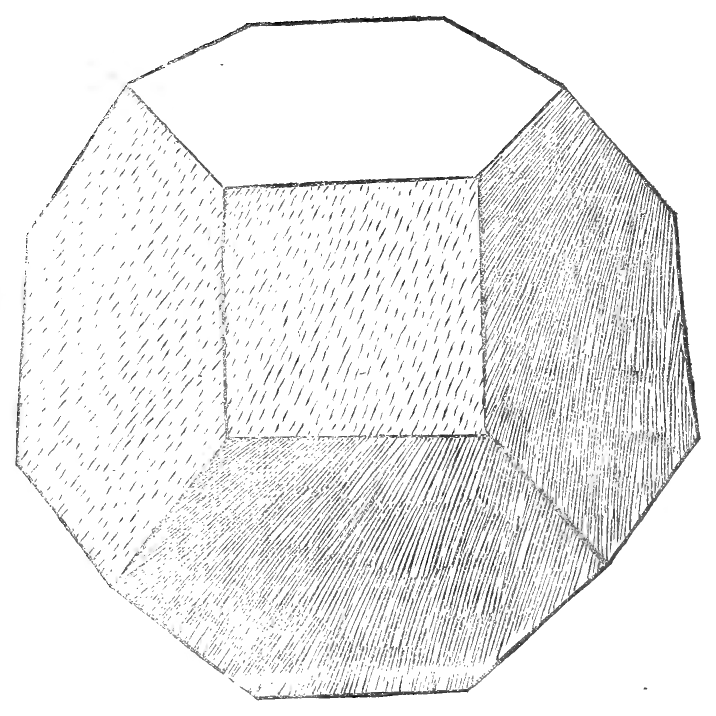
Tabulae XVII–XVIII: Octahedron Abscisum Solidum et Vacuum (1509)
By truncating each of the 6 vertices of the regular octahedron at rational parameter \(t = 1/3\), the vertices are replaced by 6 square facets, while the 8 original triangular faces are truncated into 8 regular hexagons. Leonardo da Vinci illustrates this Archimedean solid in Tabula XVII (Folio 0223) as Octahedron Abscisum Solidum and in Tabula XVIII (Folio 0225) as Octahedron Abscisum Vacuum (genus \(g = 13\)).
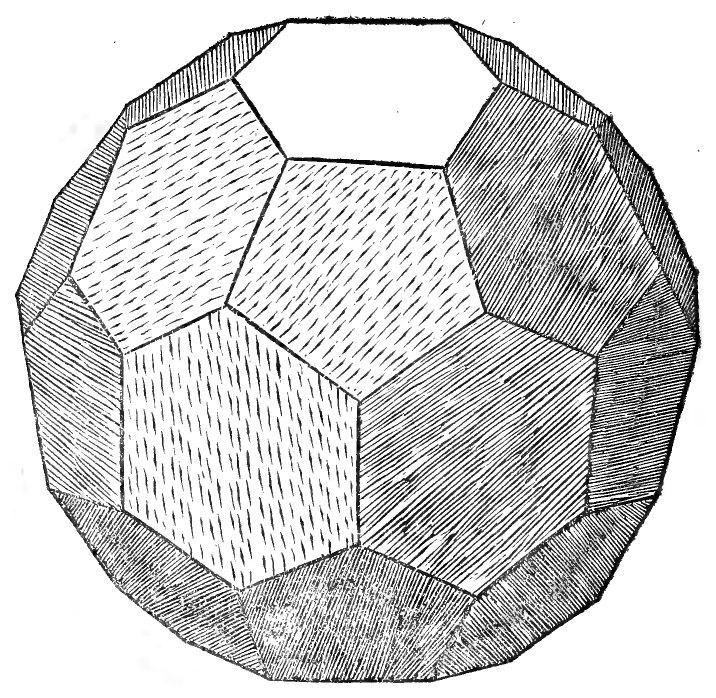
Tabulae XXIII–XXIIII: Icosahedron Abscisum — The Fullerene (1509)
When the 12 vertices of a regular icosahedron are truncated at rational parameter \(t = 1/3\), the 12 pentagonal corners become 12 regular pentagons, and the 20 triangular faces become 20 regular hexagons. Leonardo da Vinci illustrates this Archimedean solid in Tabula XXIII (Folio 0235) as Icosahedron Abscisum Solidum and in Tabula XXIIII (Folio 0237) as Icosahedron Abscisum Vacuum (genus \(g = 31\)). This pair represents the first published illustration in world history of the 32-face geometry later recognized as the soccer ball and the carbon allotrope Buckminsterfullerene (\(\text{C}_{60}\)).
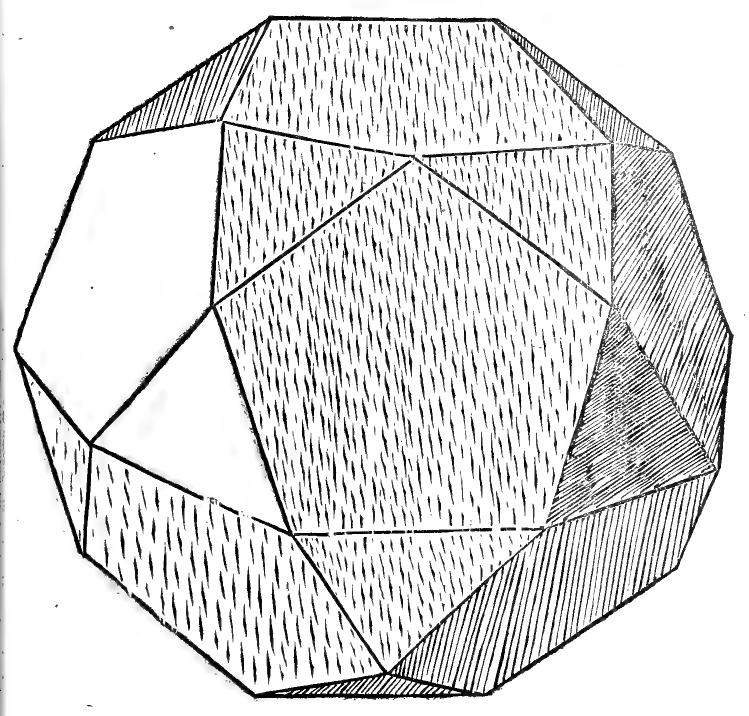
Tabulae XXIX–XXX: Dodecahedron Abscisum Solidum et Vacuum (1509)
By truncating the regular dodecahedron at the midpoints of its 30 edges (Pacioli’s edge rectification), the 20 vertices become 20 equilateral triangles, while the 12 pentagonal faces are reduced to 12 smaller regular pentagons. The resulting Archimedean semi-regular solid is the Icosidodecahedron (\(V = 30, E = 60, F = 32\)), illustrated by Leonardo da Vinci in Tabula XXIX (Folio 0247) as Dodecahedron Abscisum Solidum and in Tabula XXX (Folio 0249) as Dodecahedron Abscisum Vacuum (genus \(g = 31\)).
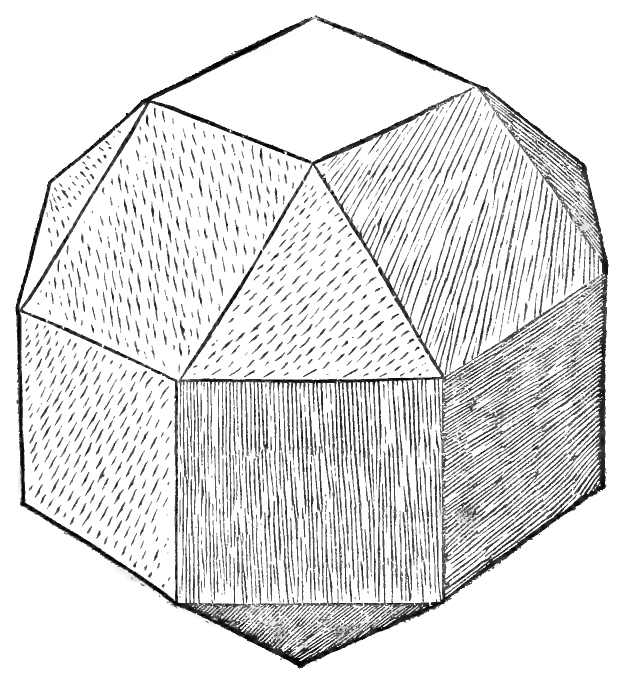
Tabulae XXXV–XXXVI: Vigintisex Basium Planum Solidum et Vacuum (1509)
The 26-Base Body (Vigintisex Basium), known in modern geometry as the Archimedean Rhombicuboctahedron, consists of 26 faces (8 equilateral triangles and 18 squares: 6 axial squares aligned with the cube and 12 belt squares aligned with the cuboctahedron), 48 edges, and 24 vertices over \(\mathbb{Q}(\sqrt{2})\). In Luca Pacioli’s De Divina Proportione (1509), this architectural climax of the treatise is illustrated by Leonardo da Vinci in Tabula XXXV (Folio 0259) as Vigintisex Basium Planum Solidum and in Tabula XXXVI (Folio 0261) as Vigintisex Basium Planum Vacuum (genus \(g = 25\)).