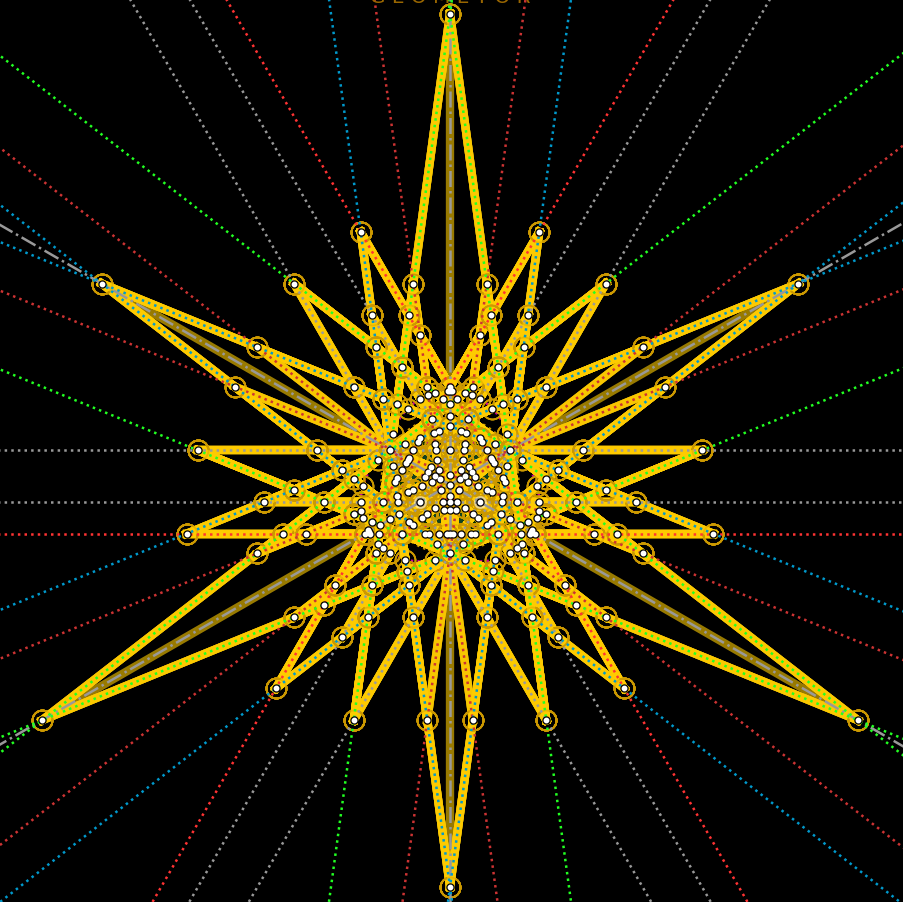
Tabulae VII–VIII: Exahedron Planum Solidum et Vacuum (1509)
The Regular Hexahedron (Cube) in Solid and Hollow Perspective by Leonardo da Vinci
Exahedron planum solidum sive cubus est corpus sex basibus quadratis aequilateris et aequiangulis contentum…
The solid plane hexahedron or cube is a body contained by six square equilateral and equiangular bases…
—Luca Pacioli, De Divina Proportione, Cap. XXIX (Venice, 1509)
The Paired Folios: Solidum and Vacuum
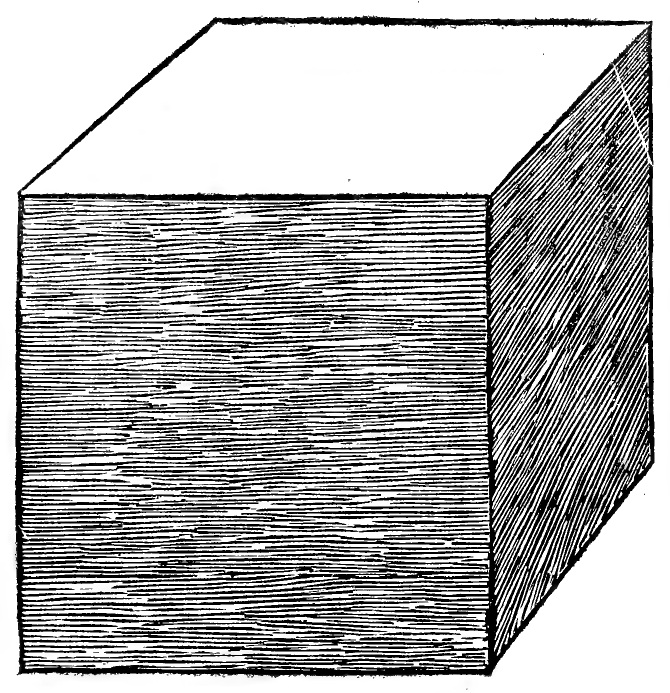
Tabula VII (Folio 0199): Exahedron sive Cubus Planum Solidum.¶ |
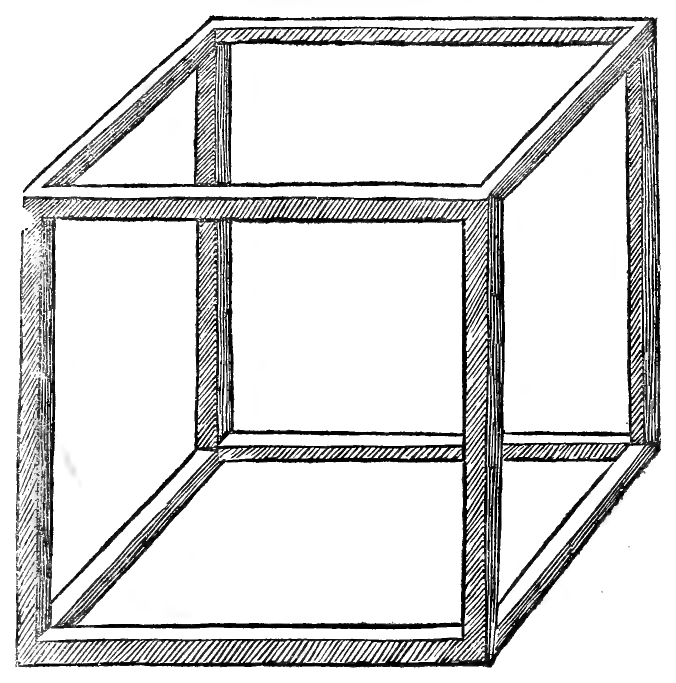
Tabula VIII (Folio 0201): Exahedron Planum Vacuum (\(g = 5\)).¶ |
Earth Cosmology & Carpenter Perspective
In Plato’s Timaeus (55d), the cube is the embodiment of Earth (Terra) because of its immovable stability, right angles, and square foundation.
Leonardo depicts the cube in two-point perspective, tilted slightly forward so that the top square face, the brightly illuminated left face, and the deeply shaded right face are all visible simultaneously.
In Tabula VIII, the hollow framework consists of 12 square beams joined at the 8 cube corners with mitered joints. Looking through the front square aperture reveals the interior faces of the rear, top, bottom, and side frame members, demonstrating Leonardo’s complete mastery of spatial recession and light transmission.
Topological Invariants of the Hollow Framework
By the Vacuate Manifold Theorem, the hollow cube framework satisfies:
Base Solid Invariants: \(V = 8\), \(E = 12\), \(F = 6\) square faces
Hollow Frame Vertices: \(V_{\text{vac}} = 2V + 4E = 2(8) + 4(12) = 64\)
Hollow Frame Edges: \(E_{\text{vac}} = 12E = 12(12) = 144\)
Hollow Frame Faces: \(F_{\text{vac}} = 6E = 6(12) = 72\) planar trapezoids
Euler Characteristic: \(\chi_{\text{vac}} = 64 - 144 + 72 = -8\)
Topological Genus: \(g = F - 1 = 6 - 1 = 5\)
Coordinate Field: Pure rational field \(\mathbb{Q}\)
Canonical Solid Codex
For the complete interactive 3D model, exact symbolic coordinates over \(\mathbb{Q}\), face normals, and dihedral angles, consult the canonical solid codex: