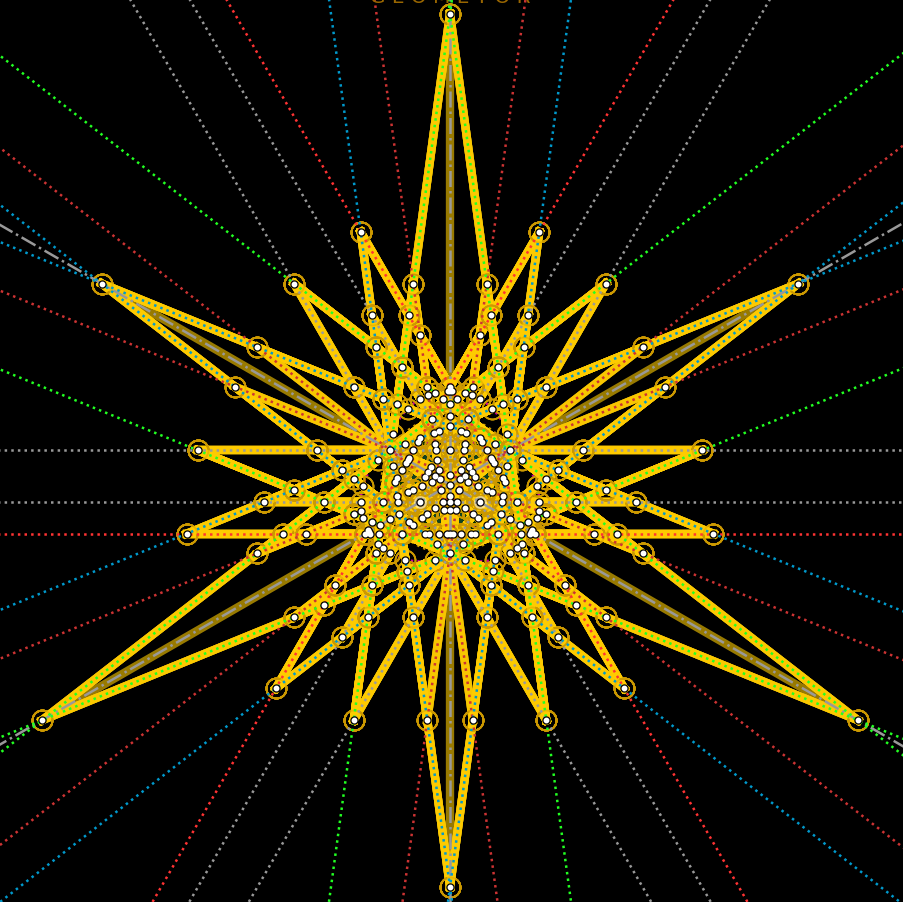
Tabulae XVII–XVIII: Octahedron Abscisum Solidum et Vacuum (1509)
The Truncated Octahedron in Solid and Hollow Perspective by Leonardo da Vinci
Octahedron abscisum solidum est quando a sex angulis octahedri abscinditur portio unius tertiae partis uniuscuiusque lateris…
The solid truncated octahedron is when from the six angles of the octahedron a portion of one-third part of each edge is cut away…
—Luca Pacioli, De Divina Proportione, Cap. XXXIIII (Venice, 1509)
The Paired Folios: Solidum and Vacuum
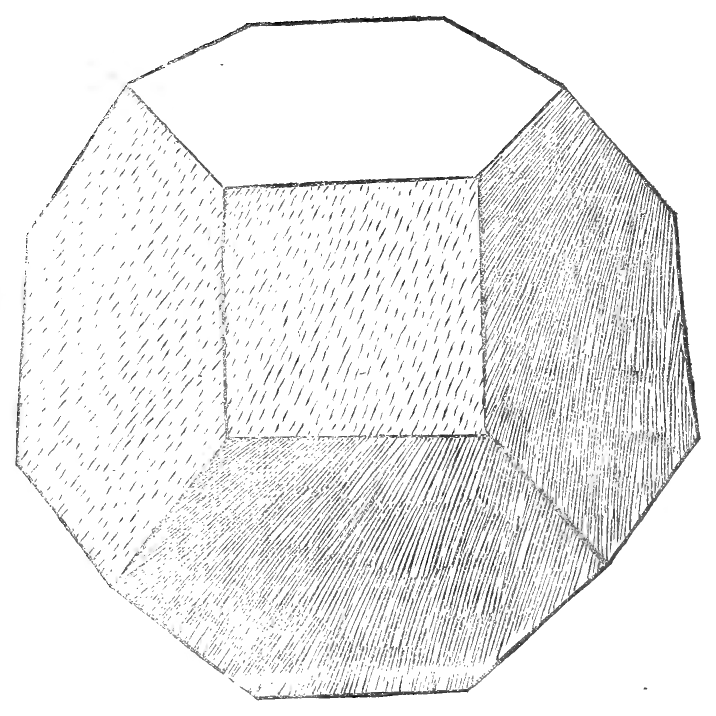
Tabula XVII (Folio 0223): Octahedron Abscisum Solidum.¶ |
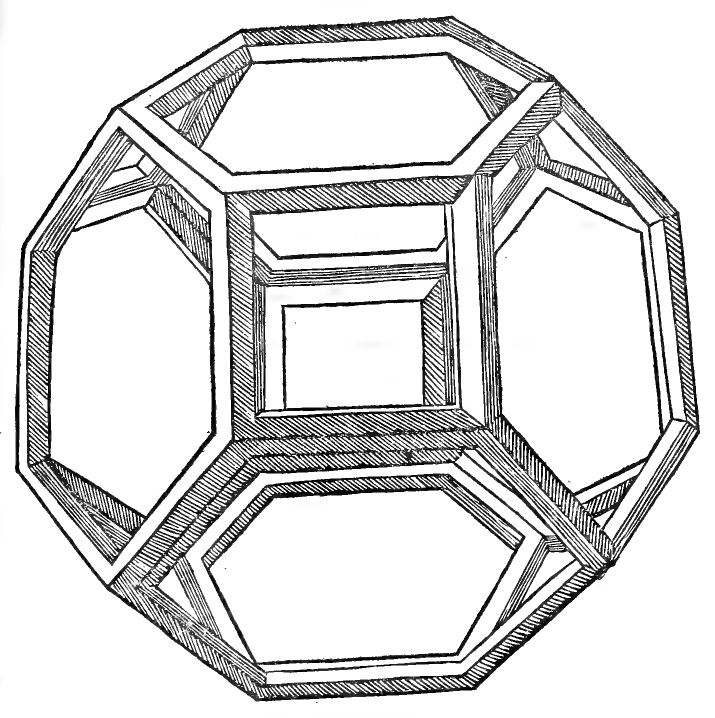
Tabula XVIII (Folio 0225): Octahedron Abscisum Vacuum.¶ |
Lord Kelvin’s Space-Filling Foam Cell
In nineteenth-century physics and mathematics, Lord Kelvin (1887) proved that the truncated octahedron is the only Archimedean solid capable of tessellating three-dimensional space by itself with minimal surface energy per unit volume (the idealized Kelvin foam cell).
In 1509, Leonardo da Vinci illustrated both its solid and hollow forms with extraordinary technical precision.
In Tabula XVII, the 6 square facets and 8 hexagonal facets are clearly demarcated by directional cross-hatching.
In Tabula XVIII, the hollow wooden framework features 14 open window apertures (6 square apertures and 8 hexagonal apertures) framed by 36 mitered wooden rails.
Topological Invariants of the Hollow Framework
By the Vacuate Manifold Theorem, the hollow truncated octahedron framework satisfies:
Base Solid Invariants: \(V = 24\), \(E = 36\), \(F = 14\) (6 squares, 8 hexagons)
Hollow Frame Vertices: \(V_{\text{vac}} = 2V + 4E = 2(24) + 4(36) = 192\)
Hollow Frame Edges: \(E_{\text{vac}} = 12E = 12(36) = 432\)
Hollow Frame Faces: \(F_{\text{vac}} = 6E = 6(36) = 216\) planar trapezoids
Euler Characteristic: \(\chi_{\text{vac}} = 192 - 432 + 216 = -24\)
Topological Genus: \(g = F - 1 = 14 - 1 = 13\)
Coordinate Field: Pure rational field \(\mathbb{Q}\)
Canonical Solid Codex
For the complete interactive 3D model, exact symbolic coordinates over \(\mathbb{Q}\), face normals, and dihedral angles, consult the canonical solid codex: