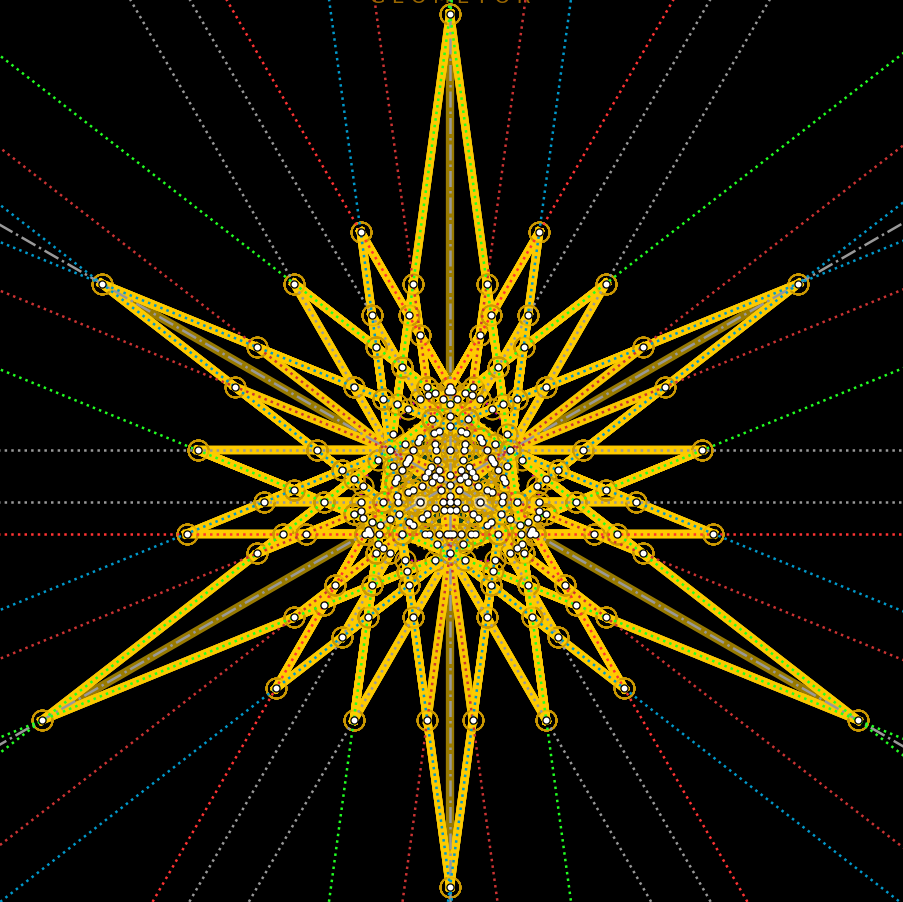
Practice of Geometry

Practica Geometriae — Leonardo Pisano / Fibonacci (1220 / ed. Boncompagni, 1862)

(c. 1170 – c. 1245 · Citizen & Mathematician of Pisa)

First Edition (1220): Dedicated to Master Dominicus
Critical Edition: Baldassarre Boncompagni (Scritti di Leonardo Pisano, Vol. II, Roma, 1862)

Table of Distinctions

Distinctio I — Pisan Pertica Superficialis (6 Pedes, 36 Denarii) / U2 R1 /: length = 6 / U1 T1 /: length = 6 / L2 R2 /: length = 6 / B2 T2 /: length = 6 / G H /: length = 6 / F E /: length = 6 / L4 R4 /: length = 6 / B4 T4 /: length = 6 / P1 P2 /: length = 6 / B5 T5 /: length = 6 / E F /: length = 6 P1 = (0, 5) P2 = (6, 5) U1 = (1, 0) U2 = (0, 1) A = (0, 6) B = (6, 6) C = (0, 0) D = (6, 0) U3 = (1, 1) I = (3, 3) P1 P2 U1 U2 A B C D U3 I

DISTINCTIO I — PROLOGUE, PISAN METROLOGY & RECTANGULAR FIELDS

Here begins the Practice of Geometry composed by Leonardo of Pisa, of the sons of Bonaccio, in the year $1220$.
Distinctio III — Fibonacci's Geometric Incenter Proof of Heron's Formula ( T H ): (x - 6)**2 + (y - 4)**2 - 16 = 0 [ B L ]: y = 0 [ B E ]: 12*x - 5*y = 0 [ G Z ]: -12*x - 9*y + 168 = 0 [ B T ]: -12*x + 18*y = 0 [ G T ]: -56*x/5 - 112*y/5 + 784/5 = 0 / A T /: length = sqrt(65) / B T /: length = 2*sqrt(13) / G T /: length = 4*sqrt(5) / T H /: length = 4 / T E /: length = 4 / T Z /: length = 4 / G L /: length = 7 / B H /: length = 6 / H G /: length = 8 B = (0, 0) G = (14, 0) A = (5, 12) H = (6, 0) E = (30/13, 72/13) Z = (46/5, 32/5) T = (6, 4) L = (21, 0) B G A H E Z T L

DISTINCTIO III — MENSURATION OF FIELDS, HERON’S PROOF & CIRCLE BOUNDS

Here begins the Third Distinction, on the measurement of all planar fields (in mensuratione omnium camporum); and first concerning triangles, which are the primary elements into which every rectilinear figure is resolved.
Distinctio IV — Dividing Triangle ABG from Point D on Side BG [ B E ]: y = 0 [ B A ]: 12*x - 5*y = 0 [ G Z ]: -12*x - 9*y + 168 = 0 [ E Z ]: x - 7 = 0 [ A D ]: x - 5 = 0 / A E /: length = 2*sqrt(37) / D Z /: length = 2*sqrt(205)/3 B = (0, 0) G = (14, 0) A = (5, 12) D = (5, 0) E = (7, 0) Z = (7, 28/3) B G A D E Z

DISTINCTIO IV — DIVISION OF PLANAR FIGURES AMONG CONSORTS

Here ends the Third Distinction, and begins the Fourth: on the division of fields among co-heirs or partners (consortes).

DISTINCTIO V — EXTRACTION OF CUBE ROOTS

Here begins the fifth distinction, on finding cube roots. Since according to the promises made in the beginning of this work I must treat of cube roots, of which I inserted a special treatise in the Book of Calculation (Liber Abaci), I have thought good to rewrite the same here, so that having continued the above distinctions I may more easily arrive at the end of the work.
Distinctio VI & Euclid XIII.18 — Five Regular Polyhedra in Sphere of Diameter 6 ( O A ): x**2 + y**2 - 9 = 0 [ A K ]: y = 0 / O C /: length = 3 / A C /: length = 3*sqrt(2) / K B /: length = 2*sqrt(2) / A B /: length = 2*sqrt(3) / B I /: length = 2*sqrt(6) / A N /: length = sqrt(18 - 6*sqrt(5)) / O M /: length = 3 / M I /: length = 3*sqrt(50 - 10*sqrt(5))/5 O = (0, 0) K = (-1, 0) A = (-3, 0) I = (3, 0) C = (0, 3) B = (-1, 2*sqrt(2)) M = (3*sqrt(5)/5, -6*sqrt(5)/5) N = (-3 + sqrt(12*(-2 + ((-2*sqrt(2) - 1)*(-6*sqrt(2) - 3 + (1 + 2*sqrt(2))*(2 - sqrt(2)) + (-2*sqrt(2) - 1)*(-sqrt(2) - 1)) + (2 - sqrt(2))*sqrt(-(-6*sqrt(2) - 3 + (1 + 2*sqrt(2))*(2 - sqrt(2)) + (-2*sqrt(2) - 1)*(-sqrt(2) - 1))**2 + 3*(2 - sqrt(2))**2 + 3*(-2*sqrt(2) - 1)**2))/((2 - sqrt(2))**2 + (-2*sqrt(2) - 1)**2) + sqrt(2))**2 + 12*(-2*sqrt(2) - 1 + ((2 - sqrt(2))*(-6*sqrt(2) - 3 + (1 + 2*sqrt(2))*(2 - sqrt(2)) + (-2*sqrt(2) - 1)*(-sqrt(2) - 1)) - (-2*sqrt(2) - 1)*sqrt(-(-6*sqrt(2) - 3 + (1 + 2*sqrt(2))*(2 - sqrt(2)) + (-2*sqrt(2) - 1)*(-sqrt(2) - 1))**2 + 3*(2 - sqrt(2))**2 + 3*(-2*sqrt(2) - 1)**2))/((2 - sqrt(2))**2 + (-2*sqrt(2) - 1)**2))**2)/6, sqrt(2)*sqrt(12*(-2 + ((-2*sqrt(2) - 1)*(-6*sqrt(2) - 3 + (1 + 2*sqrt(2))*(2 - sqrt(2)) + (-2*sqrt(2) - 1)*(-sqrt(2) - 1)) + (2 - sqrt(2))*sqrt(-(-6*sqrt(2) - 3 + (1 + 2*sqrt(2))*(2 - sqrt(2)) + (-2*sqrt(2) - 1)*(-sqrt(2) - 1))**2 + 3*(2 - sqrt(2))**2 + 3*(-2*sqrt(2) - 1)**2))/((2 - sqrt(2))**2 + (-2*sqrt(2) - 1)**2) + sqrt(2))**2 + 12*(-2*sqrt(2) - 1 + ((2 - sqrt(2))*(-6*sqrt(2) - 3 + (1 + 2*sqrt(2))*(2 - sqrt(2)) + (-2*sqrt(2) - 1)*(-sqrt(2) - 1)) - (-2*sqrt(2) - 1)*sqrt(-(-6*sqrt(2) - 3 + (1 + 2*sqrt(2))*(2 - sqrt(2)) + (-2*sqrt(2) - 1)*(-sqrt(2) - 1))**2 + 3*(2 - sqrt(2))**2 + 3*(-2*sqrt(2) - 1)**2))/((2 - sqrt(2))**2 + (-2*sqrt(2) - 1)**2))**2)/6) O K A I C B M N

DISTINCTIO VI — SOLID MENSURATION & THE FIVE REGULAR POLYHEDRA

Here begins the Sixth Distinction, on the dimension of bodies (in dimensione corporum).
Distinctio VII — Optical Quadrans (Umbra Recta & Umbra Versa) ( D I ): x**2 + (y - 12)**2 - 144 = 0 [ I P ]: y = 0 [ A H ]: x - 12 = 0 [ A B ]: 12*x + 12*y - 144 = 0 [ D C ]: 12*x + 8*y - 96 = 0 / D P /: length = 4*sqrt(13) / U3 UT3 /: length = 12 / VL3 VR3 /: length = 12 / U6 UT6 /: length = 12 / VL6 VR6 /: length = 12 / U9 UT9 /: length = 12 / VL9 VR9 /: length = 12 I = (0, 0) A = (12, 0) H = (12, 12) D = (0, 12) B = (6*sqrt(2), 12 - 6*sqrt(2)) C = (24*sqrt(13)/13, 12 - 36*sqrt(13)/13) P = (8, 0) I A H D B C P

DISTINCTIO VII — SURVEYING WITH THE QUADRANS

Here begins the Seventh Distinction, on finding the heights of elevated things, the depths of wells and valleys, and planar distances, with and without the instrument called the quadrant (quadrans, quem quidem oroscopum vocant).
Distinctio VIII — Regular Pentagon & Decagon in Circle of Diameter 10 ( I A ): x**2 + y**2 - 25 = 0 ( H D ): y**2 + (x - 5/2)**2 - 125/4 = 0 [ I K ]: y = 0 / I D /: length = 5 / H D /: length = 5*sqrt(5)/2 / I K /: length = -5/2 + 5*sqrt(5)/2 / D K /: length = 5*sqrt(10 - 2*sqrt(5))/2 / D Q1 /: length = 10*sqrt(-600*sqrt(5 - sqrt(5))*sqrt(sqrt(5) + 5) - 450*sqrt(6)*sqrt(5 - sqrt(5)) - 150*sqrt(30)*sqrt(5 - sqrt(5)) - 600*sqrt(5) - 60*sqrt(5)*sqrt(5 - sqrt(5))*sqrt(sqrt(5) + 5) + 600*sqrt(6)*sqrt(sqrt(5) + 5) + 5400)/(sqrt(5 - sqrt(5))*(sqrt(15)*sqrt(sqrt(5) + 5) + 5*sqrt(3)*sqrt(sqrt(5) + 5) + 30*sqrt(2))) / Q1 P1 /: length = 10*sqrt(-600*sqrt(5 - sqrt(5))*sqrt(sqrt(5) + 5) - 450*sqrt(6)*sqrt(5 - sqrt(5)) - 150*sqrt(30)*sqrt(5 - sqrt(5)) - 600*sqrt(5) - 60*sqrt(5)*sqrt(5 - sqrt(5))*sqrt(sqrt(5) + 5) + 600*sqrt(6)*sqrt(sqrt(5) + 5) + 5400)/(sqrt(5 - sqrt(5))*(sqrt(15)*sqrt(sqrt(5) + 5) + 5*sqrt(3)*sqrt(sqrt(5) + 5) + 30*sqrt(2))) A = (5, 0) C = (-5, 0) I = (0, 0) D = (0, 5) H = (5/2, 0) P1 = (5*sqrt(2)*sqrt(sqrt(5) + 5)/4, -5/4 + 5*sqrt(5)/4) P4 = (-5*sqrt(2)*sqrt(sqrt(5) + 5)/4, -5/4 + 5*sqrt(5)/4) P2 = (-5*sqrt(2)*sqrt(sqrt(5) + 5)/8 + 5*sqrt(10)*sqrt(sqrt(5) + 5)/8, -5*sqrt(5)/4 - 5/4) P3 = (-5*sqrt(10)*sqrt(sqrt(5) + 5)/8 + 5*sqrt(2)*sqrt(sqrt(5) + 5)/8, -5*sqrt(5)/4 - 5/4) K = (5/2 - 5*sqrt(5)/2, 0) Q1 = ((-75*sqrt(15) + 75*sqrt(2)*sqrt(sqrt(5) + 5) + 375*sqrt(3))/(sqrt(15 - 3*sqrt(5))*(sqrt(15)*sqrt(sqrt(5) + 5) + 5*sqrt(3)*sqrt(sqrt(5) + 5) + 30*sqrt(2))), (75*sqrt(5) + 225 + 75*sqrt(6)*sqrt(sqrt(5) + 5))/(sqrt(15 - 3*sqrt(5))*(sqrt(15)*sqrt(sqrt(5) + 5) + 5*sqrt(3)*sqrt(sqrt(5) + 5) + 30*sqrt(2)))) A C I D H P1 P4 P2 P3 K Q1

DISTINCTIO VIII — SUBTILITATES GEOMETRICAE & FLOS (1225)

Here begins the Eighth Distinction, on certain geometrical subtleties (de quibusdam subtilitatibus geometricis): to find the chords and sides of the regular decagon and pentagon inscribed in a circle of rational diameter $d = 10$, both by geometrical proof and by the rule of algebra (secundum modum algebrae et almuchabalae).

Scholarly Apparatus