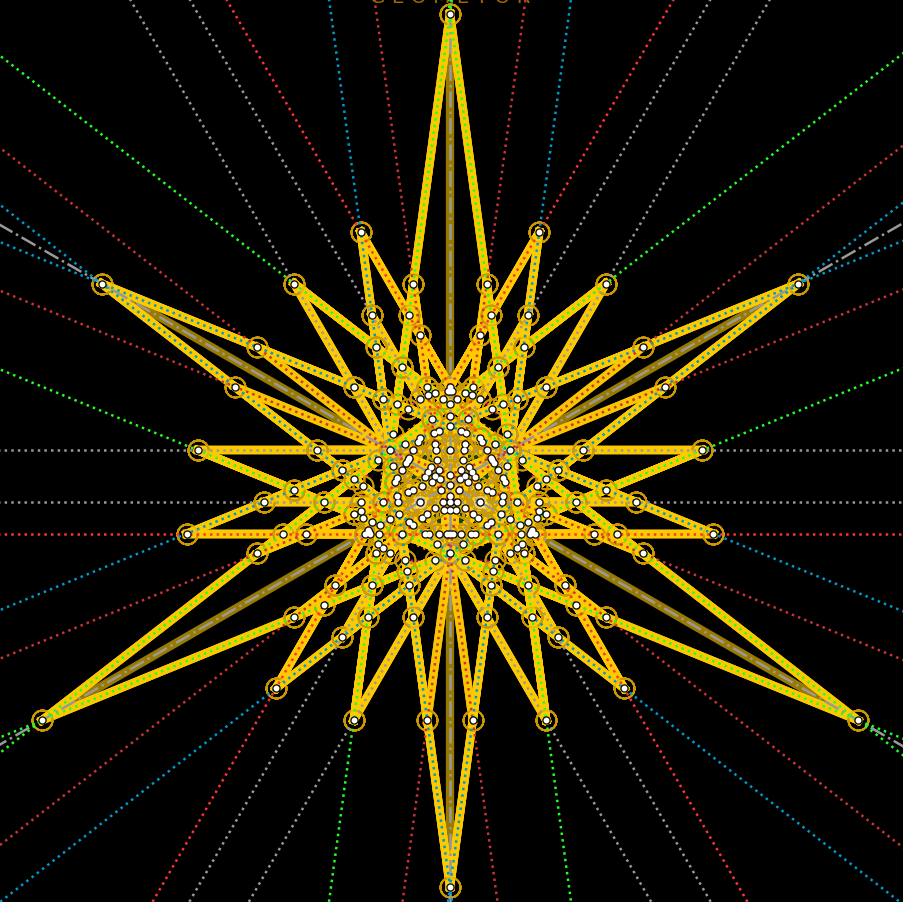
St. Thomas Aquinas (1225–1274) & the Philosophy of Mathematics
Doctor Communis and Architect of Realist Geometric Epistemology
Born at Roccasecca near Aquino around 1225, Thomas Aquinas, O.P. studied the liberal arts and the quadrivium (arithmetic, geometry, music, and astronomy) at the University of Naples before entering the Order of Preachers and studying under St. Albert the Great at Paris and Cologne. Across a remarkably concentrated career spanning Paris, Orvieto, Rome, Viterbo, and Naples (1252–1274), Aquinas produced both monumental theological syntheses and twelve penetrating commentaries on Aristotle—working closely with the literal Greek-to-Latin translations and revisions of his Dominican confrere William of Moerbeke.
Why Mathematics Occupies a Pivotal Place in Aquinas’s Thought
Although Aquinas did not compose a separate mathematical treatise like Euclid’s Elements, geometry and arithmetic form the indispensable structural middle of his entire epistemology and metaphysics:
Between Physics and Metaphysics (*Super Boetium De Trinitate* qq. 5–6, 1257–1259): In his autograph exposition of Boethius’s De Trinitate, young Master Thomas broke decisively with Platonic reification and Avicennian emanationism alike. Distinguishing the intellect’s simple apprehension of essence from its existential judgment (separatio), he showed why mathematical science abstracts dimensional form (abstractio formae) from sensible qualities while preserving continuous spatial extension (materia intelligibilis)—and why mathematical judgment terminates neither at mutable external sense nor at pure imageless intellect, but at the constructive imagination (terminari ad imaginationem).
Paradigm of Demonstrative Science (*In Posteriora Analytica*, 1270–1272): Throughout his mature Posterior Analytics commentary, Euclidean geometry provides Aquinas’s primary laboratory for analyzing axioms (dignitates / communes animi conceptiones), definitions, hypotheses (suppositiones), and postulates (petitiones), explaining why mathematics enjoys the certissimus modus demonstrationis without mistaking diagrams drawn in dust for the intelligible continuum signified through them.
Psychological Unity of Intellect and Phantasm (*In De Anima*, 1267–1268 & *ST* I q. 84–85): Aquinas insists that even in pure geometry, the human intellect never understands without turning to a concrete phantasma (conversio ad phantasmata), beholding universal necessary ratios inside a determinate imagined figure.
Heuristic Discovery by Division in Act (*In IX Metaphysicorum* lect. 10, c. 1270–1272): Commenting on Aristotle’s Metaphysics IX.9 (1051a21–33), Aquinas analyzes Euclid I.32 and III.31 to reveal how geometers discover hidden truths: what lies latent in potency in an undivided figure leaps into immediate intellectual clarity (statim manifestum est videnti) the instant auxiliary constructions divide the continuum in act.