III. On the Value of Space-Perception
A Comparative Review of Recent Researches in Geometry — Note III (Trans. M. W. Haskell, 1893, pp. 242–249)
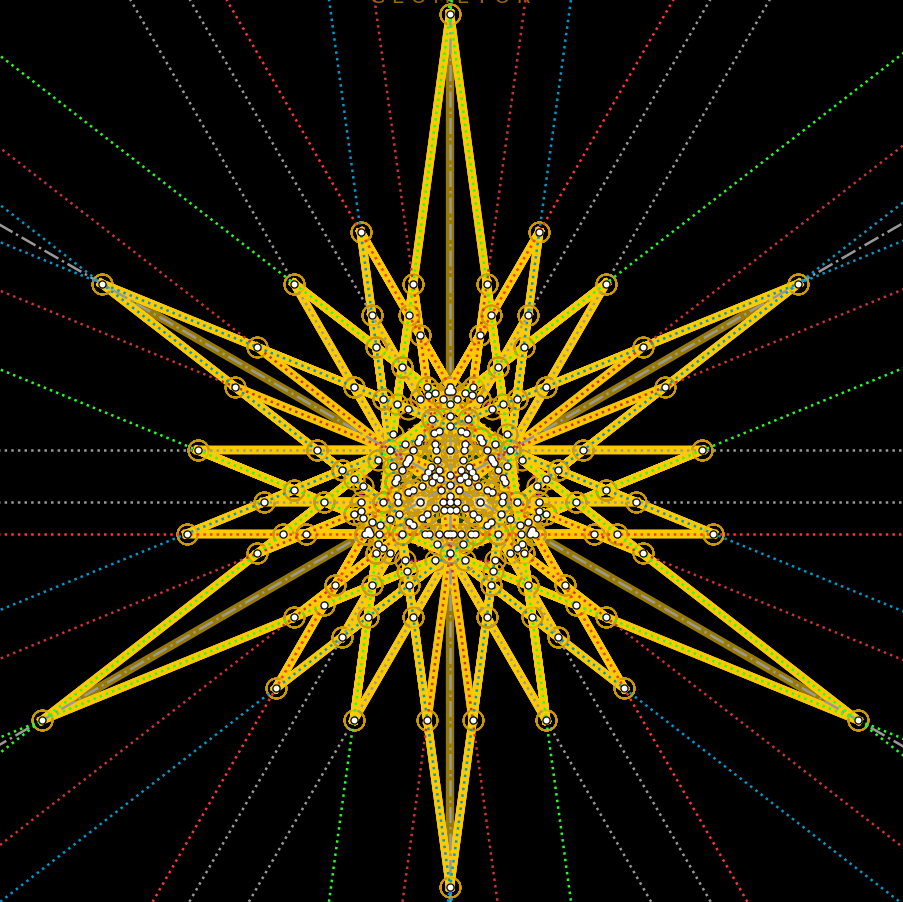
When in the text we designated space-perception as something incidental, we meant this with regard to the purely mathematical contents of the ideas to be formulated. Space-perception has then only the value of illustration, which is to be estimated very highly from the pedagogical stand-point, it is true. A geometric model, for instance, is from this point of view very instructive and interesting.
But the question of the value of space-perception in itself is quite another matter. I regard it as an independent question. There is a true geometry which is not, like the investigations discussed in the text, intended to be merely an illustrative form of more abstract investigations. Its problem is to grasp the full reality of the figures of space, and to interpret — and this is the mathematical side of the question — the relations holding for them as evident results of the axioms of space-perception. A model, whether constructed and observed or only vividly imagined, is for this geometry not a means to an end, but the subject itself.
This presentation of geometry as an independent subject, apart from and independent of pure mathematics, is nothing new, of course. But it is desirable to lay stress explicitly upon this point of view once more, as modern research passes it over almost entirely. This is connected with the fact that, vice versa, modern research has seldom been employed in investigations on the form-relations of space-configurations, while it appears well adapted to this purpose.