Book VII
Elementary Number Theory
The propositions contained in Books 7–9 are generally attributed to the school of Pythagoras. > - Heiberg
Definitions
VII.def.1
An unit is that by virtue of which each of the things that exist is called one.
VII.def.2
A number is a multitude composed of units.
VII.def.3
A number is a part of a number, the less of the greater, when it measures the greater;
VII.def.4
but parts when it does not measure it.
VII.def.5
The greater number is a multiple of the less when it is measured by the less.
VII.def.6
An even number is that which is divisible into two equal parts.
VII.def.7
An odd number is that which is not divisible into two equal parts, or that which differs by an unit from an even number.
VII.def.8
An even-times even number is that which is measured by an even number according to an even number.
VII.def.9
An even-times odd number is that which is measured by an even number according to an odd number.
VII.def.10
An odd-times odd number is that which is measured by an odd number according to an odd number.
VII.def.11
A prime number is that which is measured by an unit alone.
VII.def.12
Numbers prime to one another are those which are measured by an unit alone as a common measure.
VII.def.13
A composite number is that which is measured by some number.
VII.def.14
Numbers composite to one another are those which are measured by some number as a common measure.
VII.def.15
A number is said to multiply a number when that which is multiplied is added to itself as many times as there are units in the other, and thus some number is produced.
VII.def.16
And, when two numbers having multiplied one another make some number, the number so produced is called plane, and its sides are the numbers which have multiplied one another.
VII.def.17
And, when three numbers having multiplied one another make some number, the number so produced is solid, and its sides are the numbers which have multiplied one another.
VII.def.18
A square number is equal multiplied by equal, or a number which is contained by two equal numbers.
VII.def.19
And a cube is equal multiplied by equal and again by equal, or a number which is contained by three equal numbers.
VII.def.20
Numbers are proportional when the first is the same multiple, or the same part, or the same parts, of the second that the third is of the fourth.
VII.def.21
Similar plane and solid numbers are those which have their sides proportional.
VII.def.22
A perfect number is that which is equal to its own parts.
Propositions
VII.1
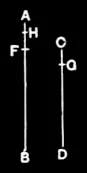
Two unequal numbers being set out, and the less being continually subtracted in turn from the greater, if the number which is left never measures the one before it until an unit is left, the original numbers will be prime to one another.
VII.2
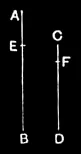
Given two numbers not prime to one another, to find their greatest common measure.
VII.3
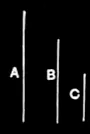
Given three numbers not prime to one another, to find their greatest common measure.
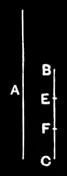
VII.4
Any number is either a part or parts of any number, the less of the greater.
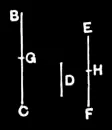
VII.5
If a number be a part of a number, and another be the same part of another, the sum will also be the same part of the sum that the one is of the one.
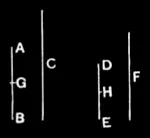
VII.6
If a number be parts of a number, and another be the same parts of another, the sum will also be the same parts of the sum that the one is of the one.
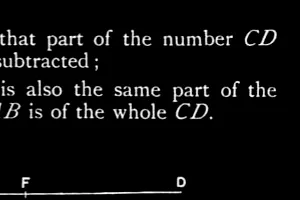
VII.7
If a number be that part of a number, which a number subtracted is of a number subtracted, the remainder will also be the same part of the remainder that the whole is of the whole.
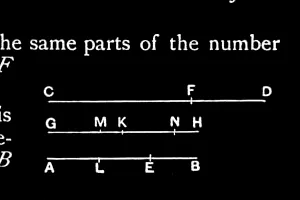
VII.8
If a number be the same parts of a number that a number subtracted is of a number subtracted, the remainder will also be the same parts of the remainder that the whole is of the whole.
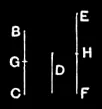
VII.9
If a number be a part of a number, and another be the same part of another, alternately also, whatever part or parts the first is of the third, the same part, or the same parts, will the second also be of the fourth.
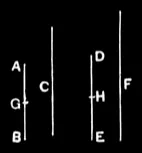
VII.10
If a number be parts of a number, and another be the same parts of another, alternately also, whatever parts or part the first is of the third, the same parts or the same part will the second also be of the fourth.
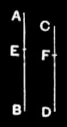
VII.11
If, as whole is to whole, so is a number subtracted to a number subtracted, the remainder will also be to the remainder as whole to whole.

VII.12
If there be as many numbers as we please in proportion, then, as one of the antecedents is to one of the consequents, so are all the antecedents to all the consequents.
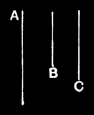
VII.13
If four numbers be proportional, they will also be proportional alternately.
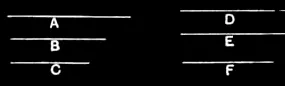
VII.14
If there be as many numbers as we please, and others equal to them in multitude, which taken two and two are in the same ratio, they will also be in the same ratio ex aequali.
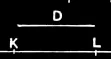
VII.15
If an unit measure any number, and another number measure any other number the same number of times, alternately also, the unit will measure the third number the same number of times that the second measures the fourth.
VII.16
If two numbers by multiplying one another make certain numbers, the numbers so produced will be equal to one another.
VII.17
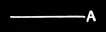
If a number by multiplying two numbers make certain numbers, the numbers so produced will have the same ratio as the numbers multiplied.
VII.18
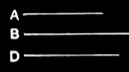
If two numbers by multiplying any number make certain numbers, the numbers so produced will have the same ratio as the multipliers.
VII.19
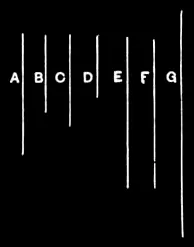
If four numbers be proportional, the number produced from the first and fourth will be equal to the number produced from the second and third; and, if the number produced from the first and fourth be equal to that produced from the second and third, the four numbers will be proportional.
VII.20
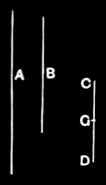
The least numbers of those which have the same ratio with them measure those which have the same ratio the same number of times, the greater the greater and the less the less.
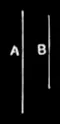
VII.21
Numbers prime to one another are the least of those which have the same ratio with them.
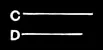
VII.22
The least numbers of those which have the same ratio with them are prime to one another.
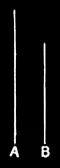
VII.23
If two number be prime to one another, the number which measures the one of them will be prime to the remaining number.
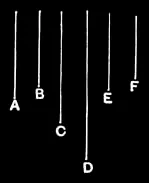
VII.24
If two numbers be prime to any number, their product also will be prime to the same.
VII.25
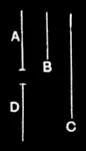
If two numbers be prime to one another, the product of one of them into itself will be prime to the remaining one.

VII.26
If two numbers be prime to two numbers, both to each, their products also will be prime to one another.
VII.27
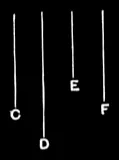
If two numbers be prime to one another, and each by multiplying itself make a certain number, the products will be prime to one another; and, if the original numbers by multiplying the products make certain numbers, the latter will also be prime to one another [and this is always the case with the extremes].
VII.28
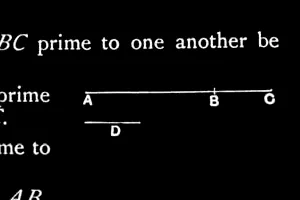
If two numbers be prime to one another, the sum will also be prime to each of them; and, if the sum of two numbers be prime to any one of them, the original numbers will also be prime to one another.

VII.29
Any prime number is prime to any number which it does not measure.

VII.30
If two numbers by multiplying one another make some number, and any prime number measure the product, it will also measure one of the original numbers.
VII.31
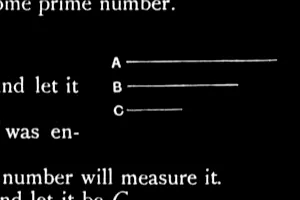
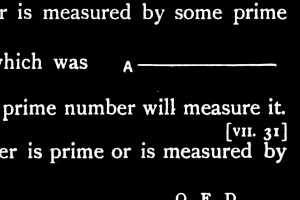
Any composite number is measured by some prime number.
VII.32
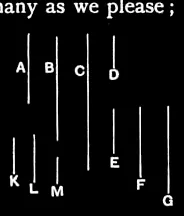
Any number either is prime or is measured by some prime number.
VII.33
Given as many numbers as we please, to find the least of those which have the same ratio with them.
VII.34
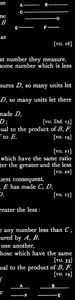
Given two numbers, to find the least number which they measure.
VII.35
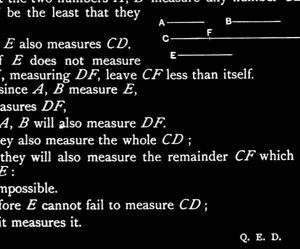
If two numbers measure any number, the least number measured by them will also measure the same.
VII.36
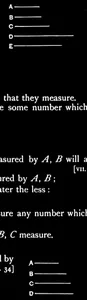
Given three numbers, to find the least number which they measure.

VII.37
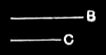
If a number be measured by any number, the number which is measured will have a part called by the same name as the measuring number.
VII.38
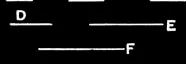
If a number have any part whatever, it will be measured by a number called by the same name as the part.
VII.39
To find the number which is the least that will have given parts.