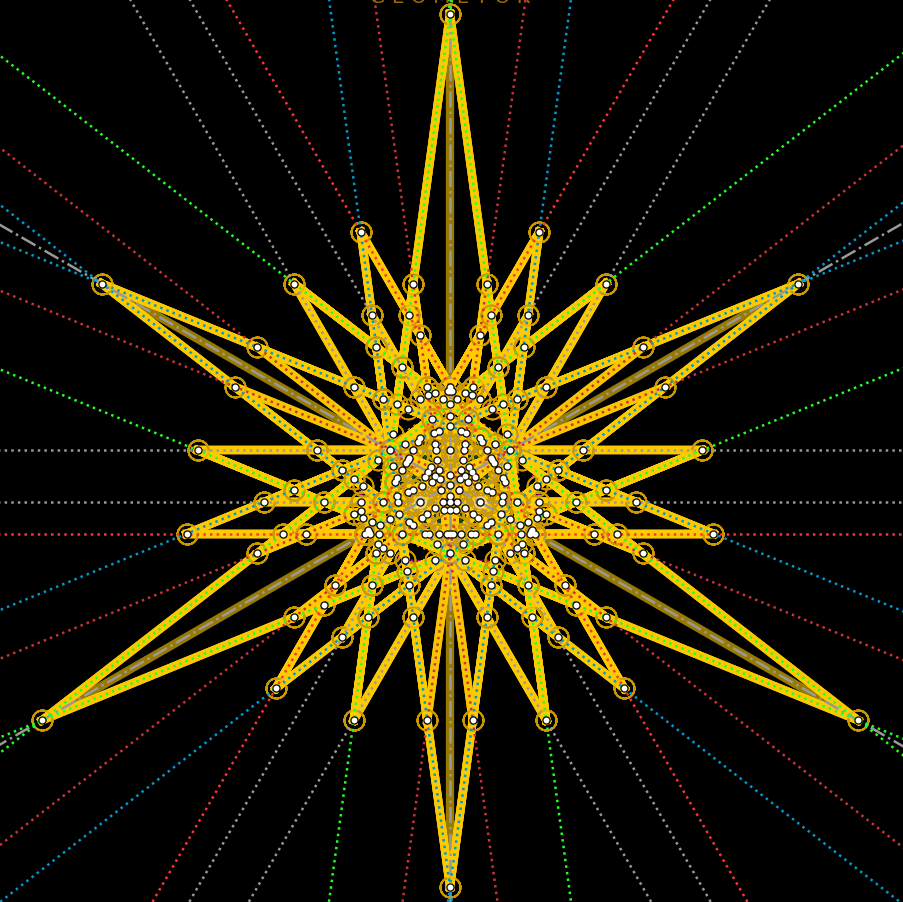
The Infinite Line as Universal Essence & Most Adequate Measure — Structural Synopsis¶
Argumentative Architecture & Interactive Diagram Guide · DI I.16–17 (1440)
I. Argumentative Synopsis¶
The Infinite Line as Essence & Most Adequate Measure (`DI I.16–17`): Translating I.13–15 to metaphysics (with explicit appeals to Pseudo-Dionysius and Maimonides), Nicholas of Cusa shows that just as an infinite line composed of one-foot segments equals one composed of two-foot segments, the Infinite Essence is the sole exact measure (adaequatissima mensura) of all finite essences—neither larger (because Minimum) nor smaller (because Maximum). Finite lines are divisible in magnitude yet indivisible in the intelligible ratio of “line”; the infinite line is whole in every finite line without being contracted to any one of them.
Infinite Beyond All Opposition (`DI I.16 §2`): Within the Absolute Maximum the minimum is maximum, supergreding every opposition. From this first principle, negative theology deduces as many negative truths as can be written or read.
Deeper Corollaries (`DI I.17`): The Maximum is neither identical with any created thing nor other than it, but the enfolding source of all that is.