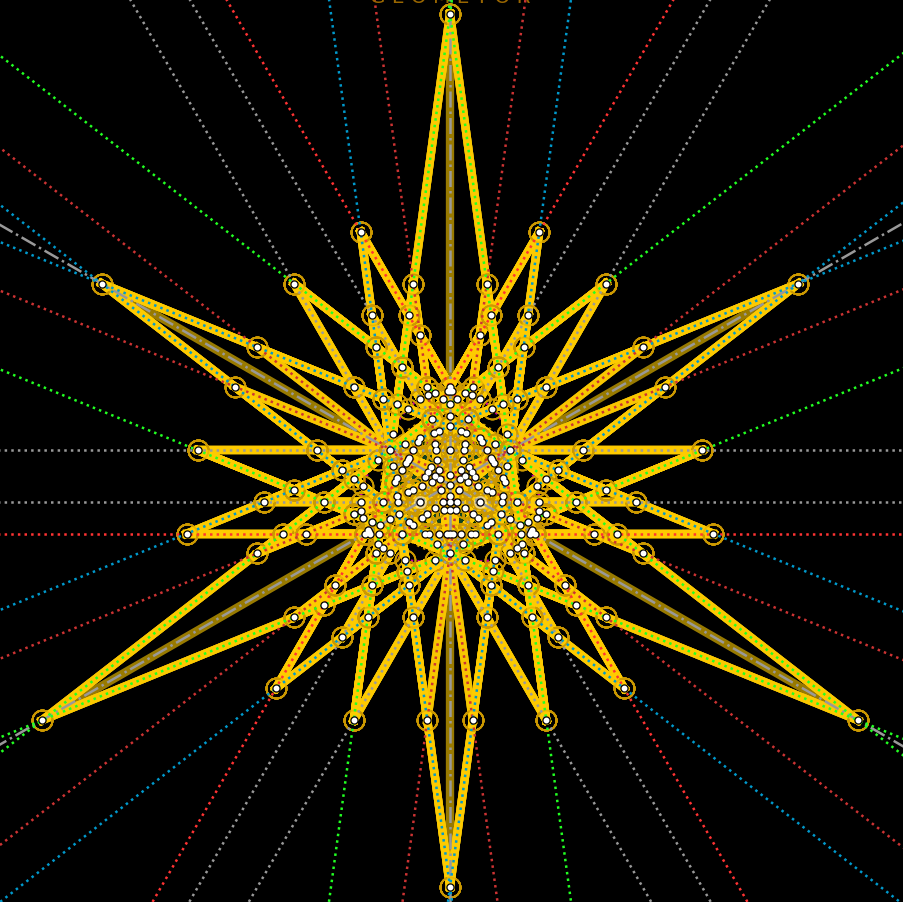
Round Equidistance & Optical Straightness
First Hypothesis: Round Equidistance & Optical Straightness (Parm. 137d–138a)
VI.1 Round Equidistance & Optical Straightness: First Hypothesis (Parm. 137d–138a)
English Translation by Benjamin Jowett (3rd ed., 1892) · Project Gutenberg #1687 (Jowett 3rd ed., 1892)
f. Parm. 138aBut if it has no parts, it will have neither beginning, middle, nor end; for these would of course be parts of it.
Right.
But then, again, a beginning and an end are the limits of everything?
Certainly.
Then the one, having neither beginning nor end, is unlimited?
Yes, unlimited.
And therefore formless; for it cannot partake either of round or straight.
But why?
Why, because the round is that of which all the extreme points are equidistant from the centre?
Yes.
And the straight is that of which the centre intercepts the view of the extremes?
True.
Then the one would have parts and would be many, if it partook either of a straight or of a circular form?
Assuredly.
But having no parts, it will be neither straight nor round?
Right.