Blaise Pascal
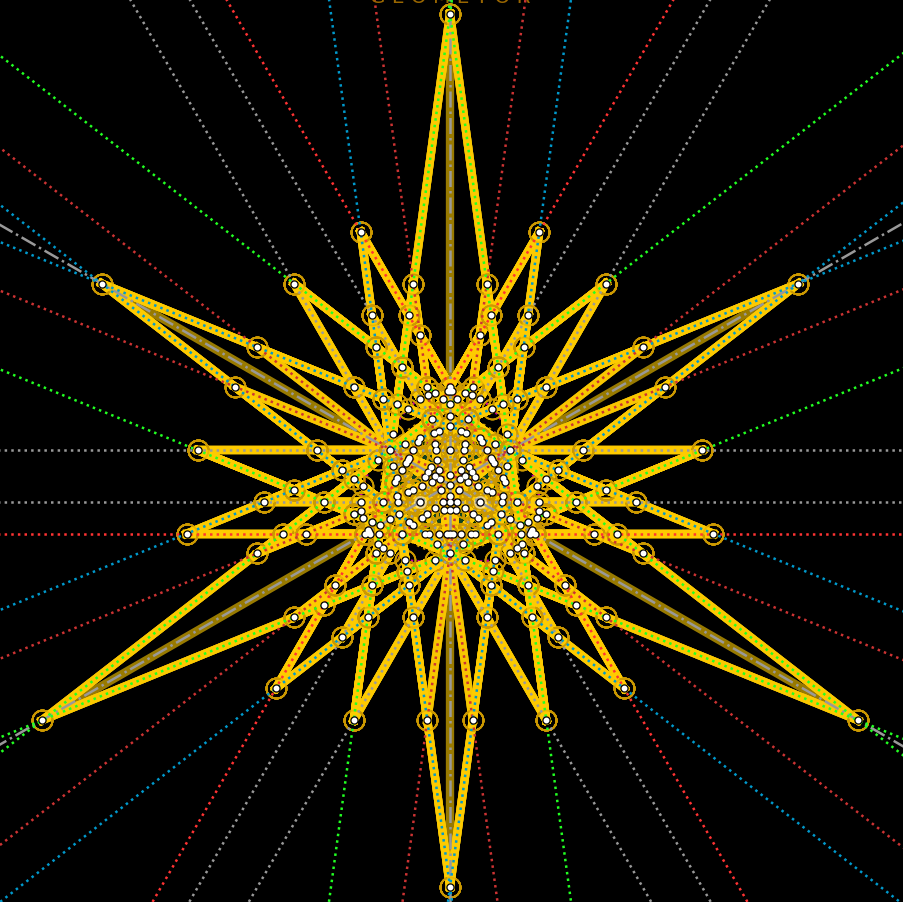
The works of Blaise Pascal (1623–1662) revolutionized projective geometry with the discovery of the hexagrammum mysticum in his landmark 1640 broadside Essay pour les Coniques. Within the interconnected GEOMETOR semantic digital archive, these foundational texts are liberated from static print bounds into addressable semantic units, calibrated vector diagrams, primary-source folio provenance, and exact symbolic algebra speaking one shared geometric language.
Essay on Conics
Pascal’s 1640 broadside announcing the Mystic Hexagram theorem for any conic section, foundational projective definitions, and universal projective invariance.
Usage
This archive is built with PHOTON Publish as an interconnected semantic book codex.
Bibliography
Primary editions, foundational treatises, and scholarly literature on Blaise Pascal’s Essay pour les Coniques (1640) and the projective geometry of the Hexagrammum Mysticum.
Glossary
Technical lexicon of early modern French projective terminology, classical Greek/Latin conic designations, and nineteenth-century incidence geometry.
changelog
Initialize geometor.pascal (codex archetype): the French mathematician and philosopher whose 1640 broadside Essay pour les Coniques unveiled the Mystic Hexagram theorem for any conic section.
About
the French mathematician and philosopher whose 1640 broadside Essay pour les Coniques unveiled the Mystic Hexagram theorem for any conic section
Demos
Executable demonstration scripts in demos/:
Connect
GEOMETOR is an open-source research and publishing initiative by phi ARCHITECT exploring constructive geometry, the divine proportion, and historical mathematical treatises.
Log
Chronological development and research log for geometor.pascal.
Modules
API summary for geometor.pascal: