
CHAPTER XXI
On Its Twelfth Almost Incomprehensible Effect
If a quantity be divided according to our said proportion, the square root of the sum of the square of the whole quantity and the square of its greater part will stand in the exact same ratio to the square root of the sum of the square of the said whole quantity and the square of its lesser part as the side of the cube stands to the side of the triangle of the twenty-base body [the icosahedron], when both bodies are circumscribed by one and the same sphere ([XIV.9]):
$$\frac{\sqrt{(a + b)^2 + a^2}}{\sqrt{(a + b)^2 + b^2}} = \frac{s_{\text{cube}}}{s_{\text{icosahedron}}}$$
Numerical Demonstration with Universal Roots (Radici Legate)
For example, let $10$ be the quantity divided according to the proportion having a mean and two extremes, so that one part—namely the greater ($a$)—is, as has been said many times, $\sqrt{125} - 5$, and the lesser ($b$) is $15 - \sqrt{125}$.
Let the said whole quantity ($10$) be squared—that is, multiplied by itself—which will make $100$.
Let its greater part ($\sqrt{125} - 5$) also be squared, which multiplied by itself will make $150 - \sqrt{12500}$.
And let its lesser part ($15 - \sqrt{125}$) also be squared, which multiplied by itself makes $350 - \sqrt{112500}$.
Now to the square of the greater part ($150 - \sqrt{12500}$) let the square of the whole quantity ($100$) be added, which will make:
$$(a + b)^2 + a^2 = 250 - \sqrt{12500}$$
And let the same square of the whole quantity ($100$) be added to the square of the lesser part ($350 - \sqrt{112500}$), which will make:
$$(a + b)^2 + b^2 = 450 - \sqrt{112500}$$
Now I say that the ratio of the square root of the first sum—namely $\sqrt{250 - \sqrt{12500}}$, formed from the square of the whole quantity and the square of the greater part—to the square root of the second sum—namely $\sqrt{450 - \sqrt{112500}}$, formed from the square of the whole quantity and the square of its lesser part—is precisely the ratio of the side of the cube to the side of the triangle of the twenty-base body [icosahedron], when both of the said bodies are circumscribed or surrounded by one and the same sphere!
These roots of sums [nested radicals] are called in geometry lines having power over the said sums (linee potenti sopra dicti congionti): that is, $\sqrt{250 - \sqrt{12500}}$ means a line whose power or square is equal to that exact sum ($250 - \sqrt{12500}$); and similarly $\sqrt{450 - \sqrt{112500}}$ means a quantity whose power or square is equal to $450 - \sqrt{112500}$.
By practicing algebraists (pratici), such roots are called by another name universal roots (radici universali) or bound roots (radici legate), as appears in our aforesaid work [Summa de Arithmetica], in the Third Treatise of its Eighth Distinction, beginning at folio 120 of the said volume. These quantities belong to the most subtle investigation and pertain to speculative practice (pratica speculativa), as is shown at length in that volume; and, Most Exalted Prince, it is impossible to express them in any simpler or lower terms (con più depresse denotationi).
Marginal Woodcut Diagrams (Paganini 1509)
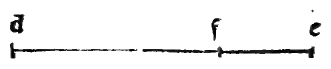
Folio 0029 Diagram 2