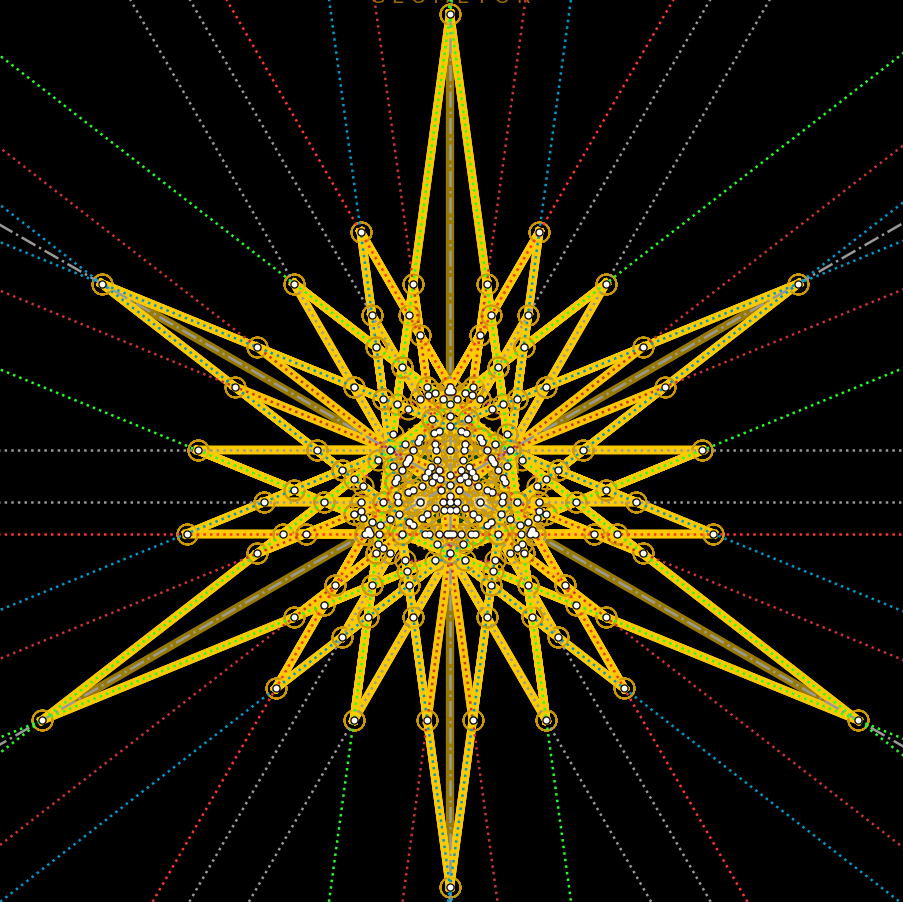
Section 1: Dedication to Wackher & Snow Stars on the Prague Bridge
Original GEOMETOR English translation from Johannes Kepler’s Strena seu de Nive Sexangula (Frankfurt am Main: Tampach, 1611; Frisch VII, pp. 715–730).
Since I am well aware, Illustrious Herr Wackher, how keenly you delight in Nothing (Nihil)—not for its bareness of price, to be sure, yet for the witty play of delightful sparrows—I readily conjecture that a New Year’s gift (Strena) will prove all the dearer to you the nearer it approaches to Nothing. Anxious in thought as to where I might find something virtually indistinguishable from Nothing, I happened just then to be crossing the bridge at Prague, mortified by my lack of a worthy gift, when by a timely chance thickened vapor condensed into snow, and scattered little flakes fell here and there upon my coat—every single one six-cornered, with feathered rays (omnes sexanguli, villosis radiis).
By Hercules! Here at last was something smaller than any drop, yet endowed with geometric figure; here was the longed-for New Year’s gift for a lover of Nothing, and one worthy for a mathematician—who neither has Nothing nor receives Nothing—to bestow, since it descends from heaven and bears a likeness to the stars! Indeed, by a pun in our German tongue, Schnee (“snow”) sounds almost like the Latin Nix (“snow” / German nichts, “nothing”). Yet why, whenever snow begins to fall before its flakes are tangled into clusters, does it always fall with six corners and six feathered rays spaced at $60^\circ$ in a single plane, rather than five or seven?