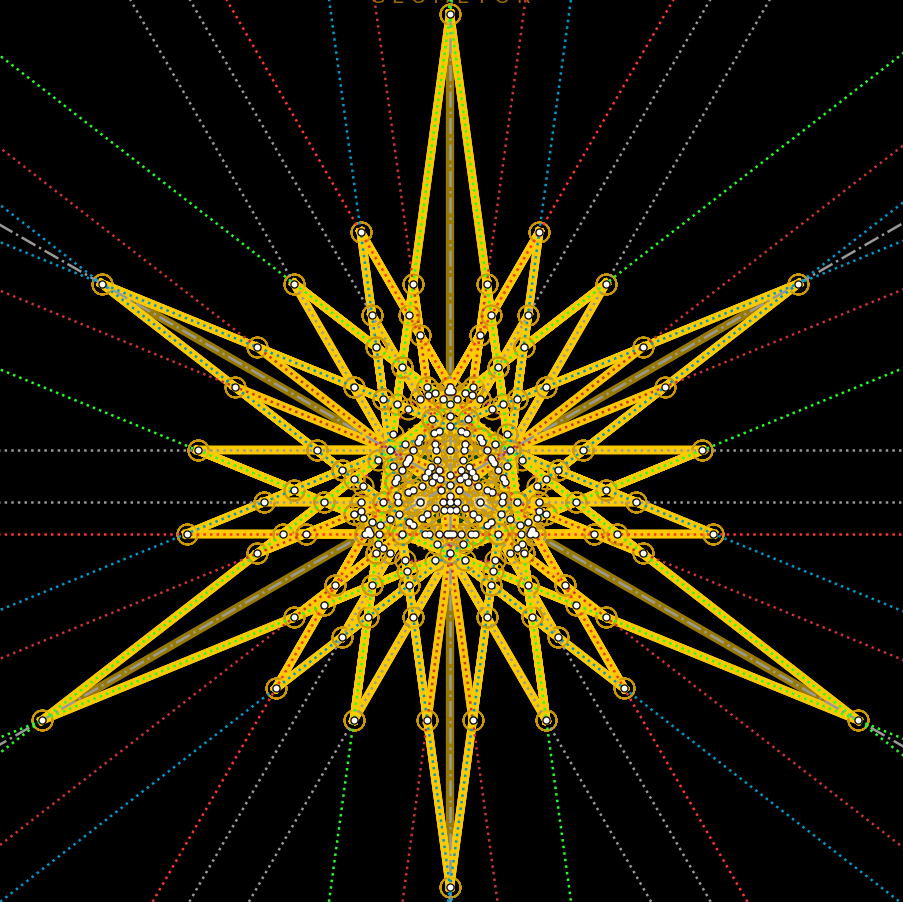
Prooemium: Vindication of Euclid Book X Against Petrus Ramus
Original GEOMETOR English translation from Johannes Kepler’s Harmonices Mundi Liber I: De ortu figurarum regularium harmonicarum (Linz: Tampach/Plancus, 1619, pp. 1–46; Frisch V, pp. 75–125).
Since antiquity saw that the origins of harmonic proportions arise from the divisions of the circle into equal parts executed geometrically—that is, from knowable (scibiles) regular plane figures—it was necessary first of all to point out to geometers today those deepest mysteries which Euclid set forth in his Tenth Book concerning incommensurable lines (Elements X), corroborated by the commentary of Proclus Diadochus (In Euclidem).
Why did that great treatise of Euclid’s Tenth Book lie almost neglected down to our day? Because Petrus Ramus, an otherwise sharp and enterprising mind, stumbled upon its subtle distinctions without perceiving toward what goal Euclid was steering! Ramus reviled the Tenth Book so fiercely—claiming that among all human sciences no obscurity comparable to that labyrinth had ever appeared—that even my friend Willebrord Snellius, though republishing the enunciations, hesitated to defend their utility. I confess that I myself stood near Ramus’s camp until I entered upon the investigation of celestial harmonies: then at sudden daylight I beheld that Euclid had constructed the entire edifice of commensurable lengths, commensurable squares, medial lines, binomials, apotomes, majors, and minors for one supreme architectural purpose—to distinguish knowable and constructible regular figures (scibilia) from unknowable and non-constructible figures (inscibilia)!