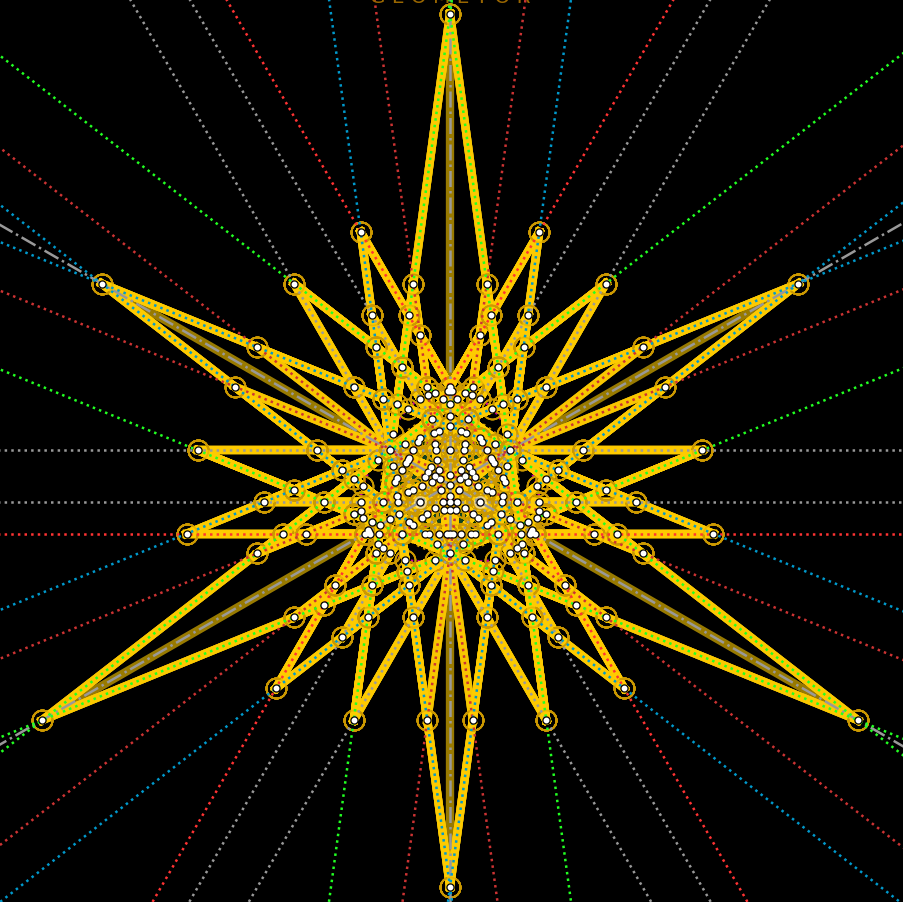
Definition of Figure — Critical Notes
Literal Greek Mathematical Philology & Reception · Meno 75d–76a
I. Geometric Significance
In Meno 75d–76a, Socrates introduces the canonical philosophical definition of figure (schēma): that in which a solid terminates (στερεοῦ πέρας). This passage provides the philosophical foundation for:
Euclid Elements I, Def. 14: “A figure is that which is contained by any boundary or boundaries.”
Euclid Elements XI, Def. 2: “The extremity of a solid is a surface.”
II. Literal Greek Mathematical Philology (Contra Paraphrasim)
76a7 — στερεοῦ πέρας σχῆμα εἶναι: Jowett translates ‘figure is the limit of solid’, faithfully preserving Burnet's technical pairing of stereon and peras. Compare Elements XI, Def. 2 (στερεοῦ δὲ πέρας ἐπιφάνεια, ‘the extremity of a solid is a surface’) and I, Def. 14 (‘a figure is that which is contained by any boundary or boundaries’).
III. Canon Reception
Aristotle (Anal. Post. I.1, 71a29;
plato:meno): Cites the Meno inquiry to illustrate how demonstrative science requires pre-existent nominal understanding of figure and boundary.Proclus (In Euclidem, Friedlein 136–143;
plato:meno:76A): Devotes extended commentary to Plato’s definition of figure as limit of solid, reconciling it with Euclid’s definitions.
IV. Executable Symbolic Verification
In accordance with GEOMETOR’s strict content/code separation for historical editions, executable geometor.model SymPy constructions live in src/geometor/plato/ and Demos.