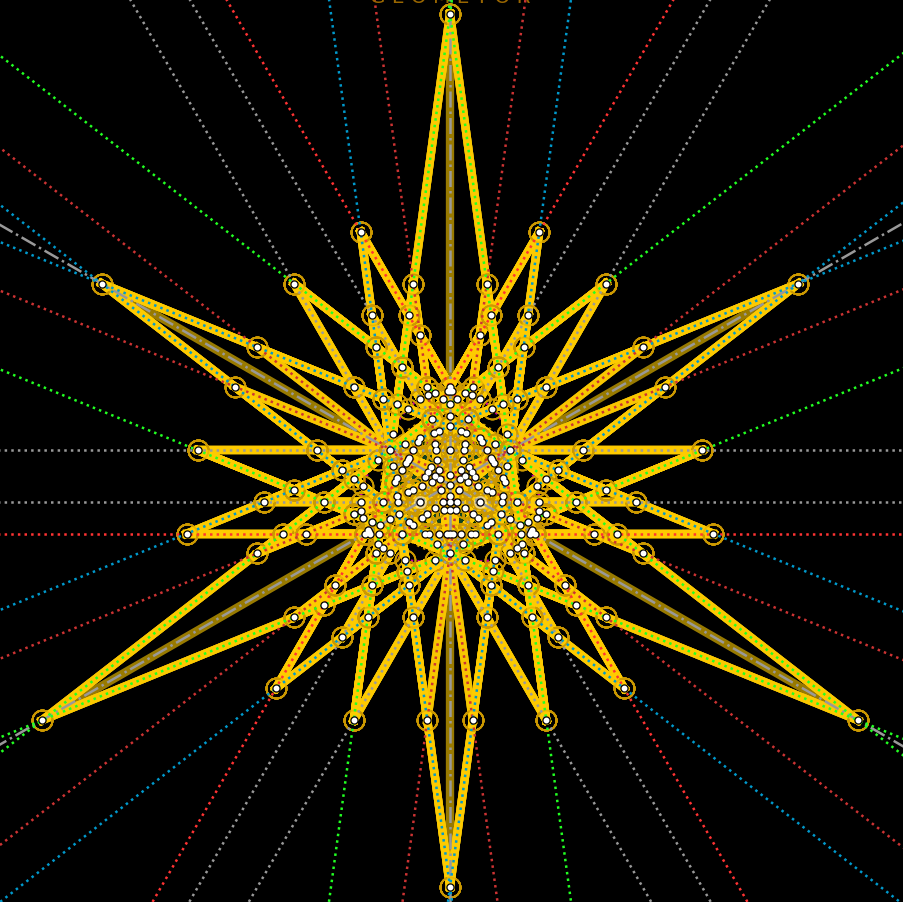
Incommensurability — Synopsis
The Three Mathematical Disciplines & Dimensional Incommensurability · Laws VII, 817e–820d
Architectural Thesis
Unit VI gathers the late-Platonic axiomatic, ontological, aesthetic, and pedagogical foundations of geometry across Parmenides, Philebus, and Laws Book VII:
Dimensional Incommensurability (*Laws* VII 817e–820d): In his final work, the Athenian Stranger mandates three liberal mathematical disciplines (arithmetic, metrics of line/surface/solid, and celestial kinematics) and castigates Greek education for assuming that length (O C, \(Q=1\)), plane surface (O D, \(Q=2\)), and solid depth (O E, \(Q=3\)) are universally commensurable.
Stephanus Overview
Section |
Stephanus Span |
Mathematical & Philosophical Argument |
Tracks |
|---|---|---|---|
VI.5 Laws VII Incommensurability |
|
Commensurable vs. incommensurable lengths, planes, and solids (\(1, \sqrt{2}, \sqrt{3}\)). |