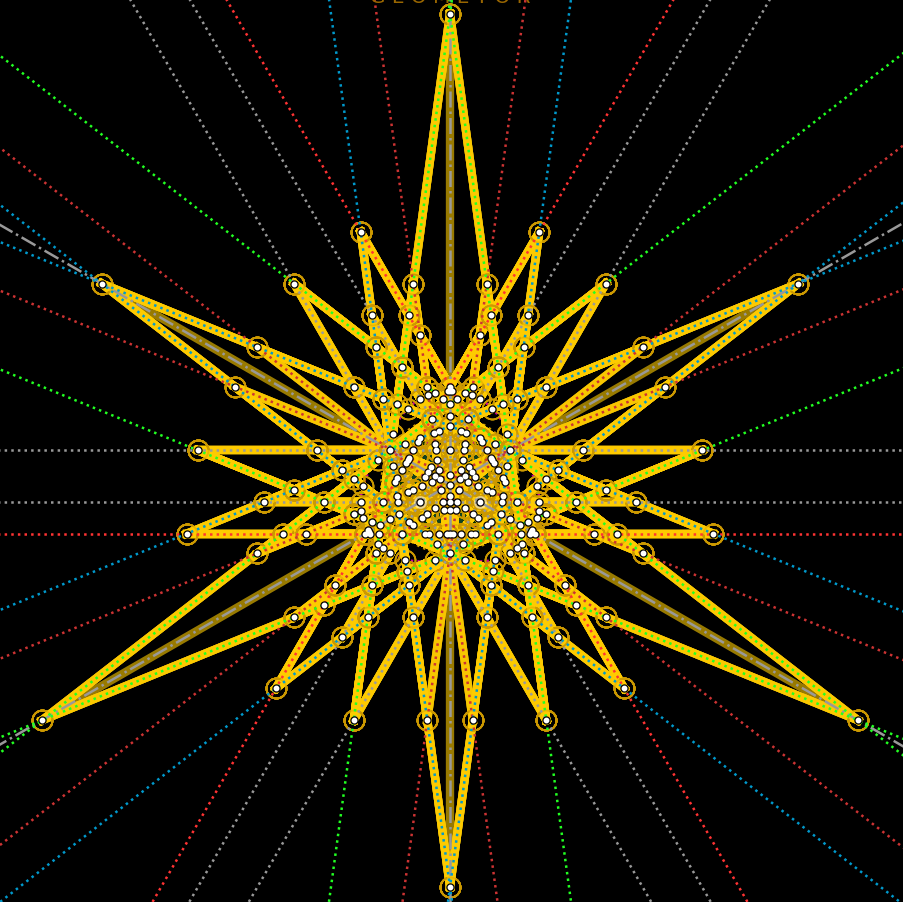
Methods and Theories for Geometrical Constructions

Applied to 410 Problems — Julius Petersen (1866 / 1879)

Author: Julius Petersen (1839–1910)
Translator: Sophus Haagensen (Cand. Polyt. C.E., 1879)
First Danish Edition (1866): Methoder og Theorier til Løsning af geometriske Konstruktionsopgaver, Karl Schønbergs Forlag, Kjøbenhavn, 1866 (2nd rev. ed., Andr. Fred. Høst & Søns Forlag, 1879)
Authorized English Edition (1879): Andr. Fred. Høst & Son, Copenhagen / Sampson Low, Marston, Searle & Rivington, London, 1879 (Public Domain)
GEOMETOR Digital Edition: Synchronized 3-track edition (English 1879 · Summary · Notes) curated within the GEOMETOR canon

“Method is my principal object. It has been my endeavour to systematize these methods and display them in clear, elementary form so that the beginner may learn how to attack a proposed problem methodically rather than by blind trial.”

—Julius Petersen, Methods and Theories, Preface (1879), pp. 1–2


Table of Contents

Petersen Problem 42 — Four-Part Construction & Discussion Schema ( M B ): y**2 + (x - 5)**2 - 25 = 0 [ B C ]: y = 0 [ H J ]: y - 4 = 0 [ B A1 ]: -4*x + 2*y = 0 [ C A1 ]: -4*x - 8*y + 40 = 0 B = (0, 0) C = (10, 0) M = (5, 0) H = (0, 4) A1 = (2, 4) A2 = (8, 4) D1 = (2, 0) B C M A1 A2 D1

Preface & Introduction — The Four-Stage Anatomy of Construction

Preface (1879)

Petersen Locus f — Circle of Apollonius & Method of Two Loci ( M C ): y**2 + (x - 20)**2 - 100 = 0 [ A B ]: y = 0 [ B V ]: x - 15 = 0 [ U V1 ]: 15*x + 15*y - 150 = 0 [ U V ]: 5*x + 15*y - 150 = 0 [ H0 I ]: y - 8 = 0 [ P1 C ]: 8*x - 4*y - 80 = 0 [ P1 C1 ]: 8*x + 16*y - 240 = 0 [ P1 A ]: 8*x - 14*y = 0 [ P1 B ]: 8*x + y - 120 = 0 A = (0, 0) B = (15, 0) U = (0, 10) V = (15, 5) V1 = (15, -5) C = (10, 0) C1 = (30, 0) M = (20, 0) H0 = (0, 8) P1 = (14, 8) P2 = (26, 8) A B C C1 M P1 P2

Chapter I — Geometrical Loci

Petersen Problem 259 — Trapezoid from Four Sides via Parallel Translation ( A R ): x**2 + y**2 - 225 = 0 ( E H ): y**2 + (x - 14)**2 - 169 = 0 [ A B ]: y = 0 [ D L ]: y - 12 = 0 [ E D ]: -12*x - 5*y + 168 = 0 [ B Q ]: 2880*x/169 + 1200*y/169 - 54720/169 = 0 A = (0, 0) B = (19, 0) E = (14, 0) D = (9, 12) C = (14, 12) A B E D C

Chapter II — Transformation of the Figure

Petersen Problem 349 — Equilateral Triangle Across Three Parallel Lines ( P R ): x**2 + y**2 - 28/3 = 0 ( R P ): (x - sqrt(3)/3)**2 + (y - 3)**2 - 28/3 = 0 [ P A1 ]: y = 0 [ B1 B2 ]: y - 1 = 0 [ C1 C2 ]: y - 3 = 0 [ B1p B2p ]: -3*sqrt(3)*x/2 + 3*y/2 - 3 = 0 [ P Q ]: -x + 5*sqrt(3)*y/3 = 0 [ P R ]: -3*x + sqrt(3)*y/3 = 0 P = (0, 0) A1 = (4, 0) B1 = (0, 1) B2 = (3, 1) C1 = (0, 3) C2 = (4, 3) R = (sqrt(3)/3, 3) Q = (5*sqrt(3)/3, 1) P R Q

Chapter III — The Theory of Revolution

Chapter III — The Theory of Revolution (pp. 70–94, §§ 1–5 & Problems 349–402)

Glossary

Petersen’s heuristic starting rule (p. 4): assume the construction problem already solved, draw a figure representing the solved configuration, and examine the relations linking given and sought elements until a constructible sub-figure or pair of loci emerges.


Scholarly Apparatus

  • Petersen Master Cross-Repository Concordance — Mapping Petersen’s heuristic loci, transformations, circle systems, and constructibility criteria across geometor/altshiller-court, geometor/euclid, geometor/elements, geometor/hilbert, geometor/pappus, geometor/lemoine, and geometor/etc.

  • Systematic Bibliography — Primary Danish/English/French/German editions, classical treatises, and modern heuristic descendants.

  • People — Ancient and modern geometers cited across the 410 problems and commentary.

  • Technical Glossary of Constructive Geometry — Bilingual Danish/English/Greek analytical and transformational vocabulary.