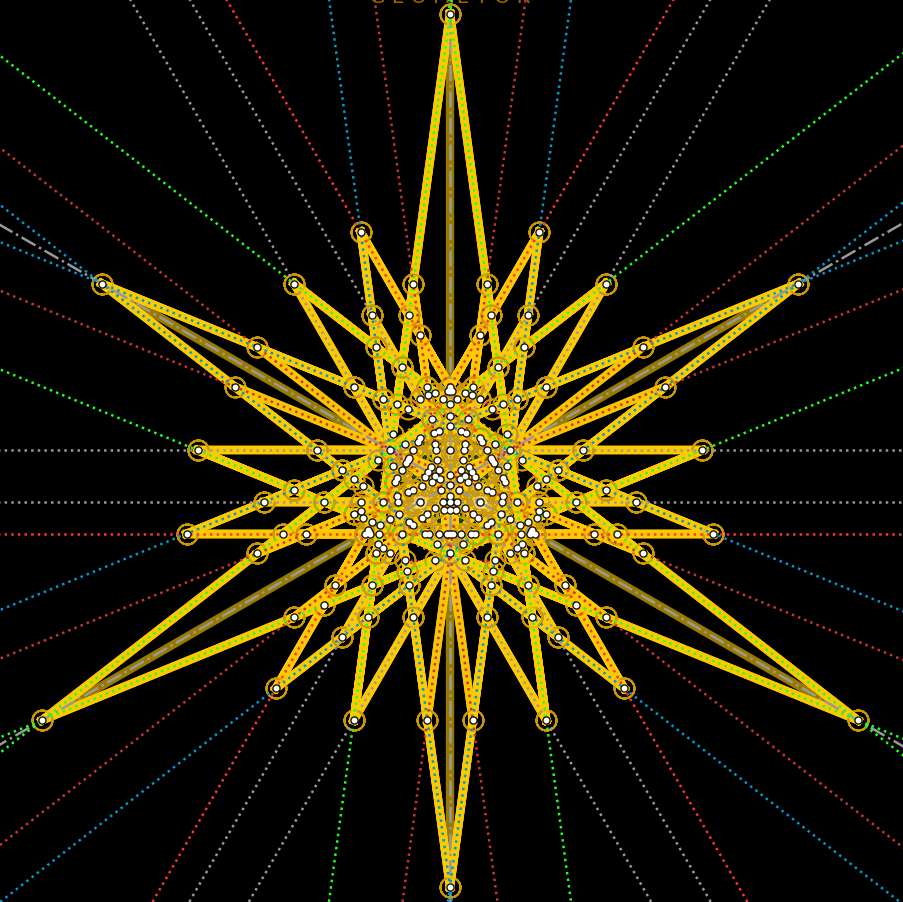
Bertrand Arthur William Russell
British Philosopher, Logician & Mathematician
Fellow of Trinity College, Cambridge, and co-author with A. N. Whitehead of Principia Mathematica. His 1897 Essay on the Foundations of Geometry synthesized Klein’s metageometry with a revised Kantian epistemology of the ‘form of externality’, whereas his 1903 Principles of Mathematics inaugurated modern logicism, reducing pure geometry to the logic of multi-dimensional relations and sharpening the critique of Euclidean superposition later answered by P. Hoenen, S.J.
Entered Trinity College, Cambridge in October 1890 as a scholar in the Mathematical Tripos (7th Wrangler, 1893) before turning to the Moral Sciences Tripos (First Class with distinction, 1894). Throughout the crucial decade 1894–1903, the foundations of geometry formed the central crucible in which Russell forged his philosophy of mathematics. Expanded from his 1895 Fellowship dissertation, the 1897 Essay modernized Kant’s Critique of Pure Reason in light of nineteenth-century metageometry. Following decisive encounters with Peano, Pieri, and Cantor at the 1900 Paris Congress, Russell transformed mathematical philosophy through the logic of relations in The Principles of Mathematics (1903).
GEOMETOR Website: Bertrand Arthur William Russell
GitHub Repository: https://github.com/geometor/bertrand-russell