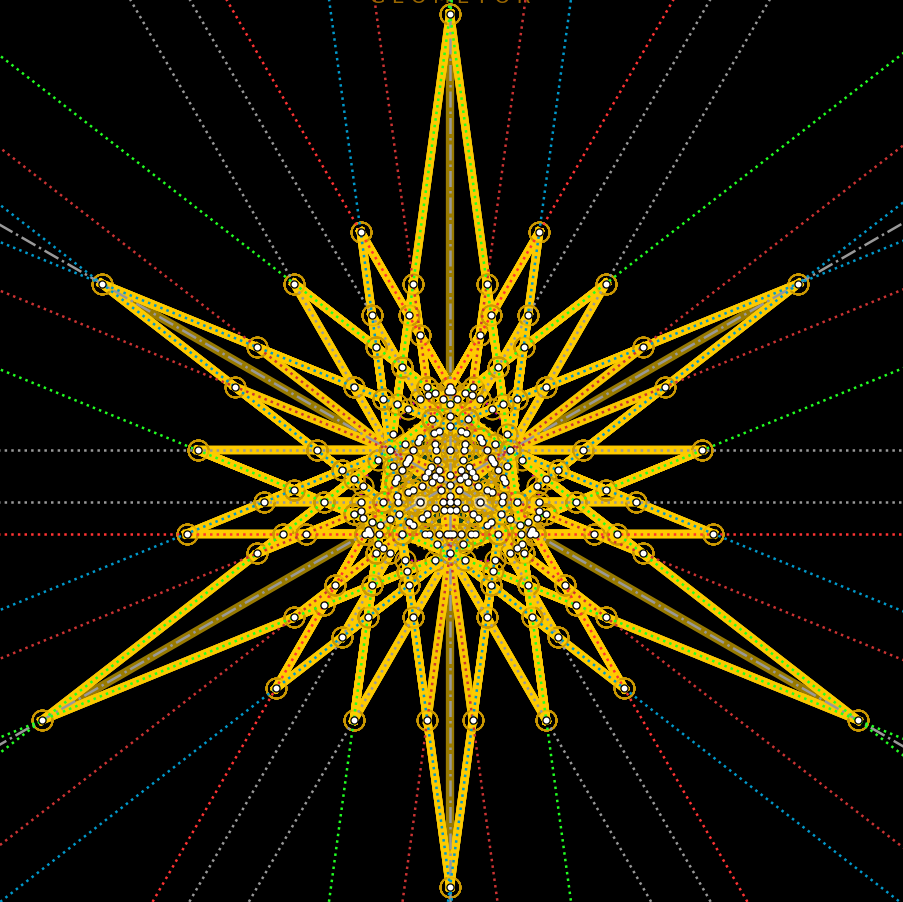
Posterior Analytics I.24 — Structural Synopsis
Thematic Synopsis & Argument Progression · Bekker 85a13–86a30
Architectural Thesis
In Analytica Posteriora I.24, I.27, I.31, and II.19 (85a–88a, 99b–100b), Aristotle completes the epistemology of demonstrative science by establishing why commensurate universal proof excels particular proof, why arithmetic exceeds geometry in exactitude, why sensory observation (aisthēsis) can never cross the threshold into scientific necessity (87b35), and how induction from sense-perception culminates in nous as the principle of principles.
Logical & Noetic Progression
I.24 (85a13–86a30) — Superiority of Universal over Particular Demonstration
Refutes the illusion that particular proof is ‘more direct’, proving that only universal demonstration exhibits the intrinsic propter quid cause—why the exterior angles of any polygon sum to four right angles (85b38) or why triangle qua triangle possesses 2R (85b5).
Chapter Conspectus
Treatise & Chapter |
Bekker Span |
Thematic Scope |
Tracks |
|---|---|---|---|
Analytica Posteriora I.24 |
|
Superiority of Universal over Particular Demonstration |
Reception Snapshot in the GEOMETOR Canon
This chapter encompasses 3 distinct Bekker loci cited across geometor/euclid, geometor/hoenen, and geometor/pacioli. See the companion Critical Notes & Dual Commentary and the master Bekker Concordance for full folio and page back-references.