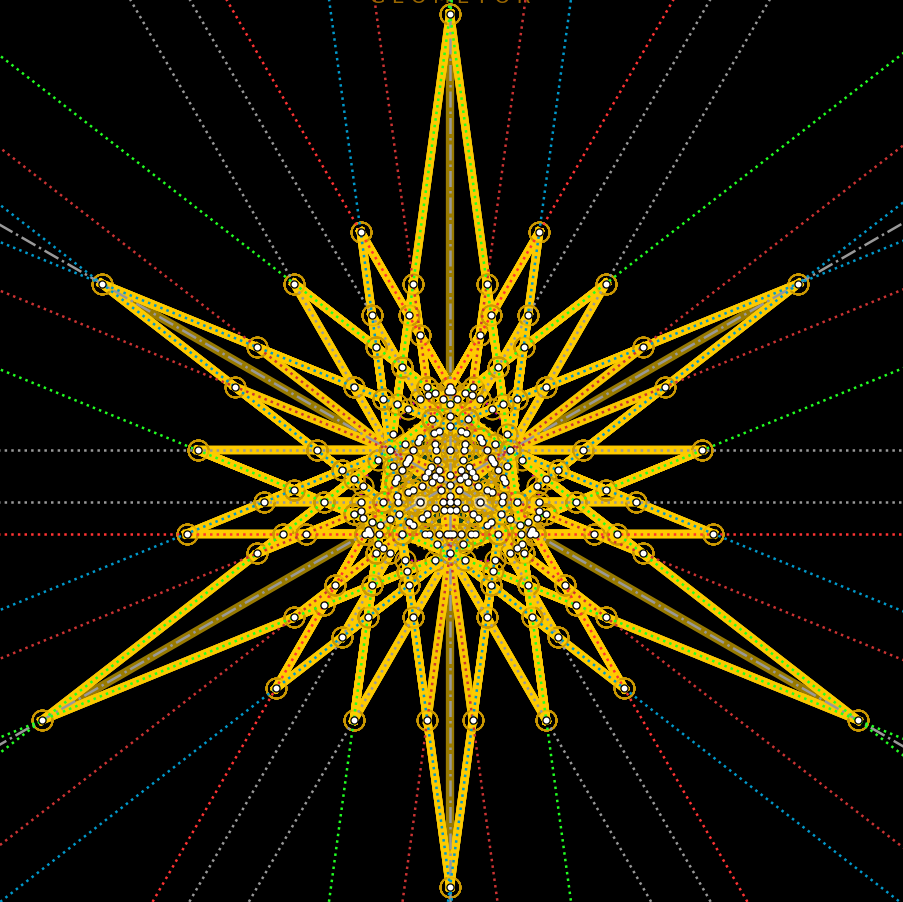
Posterior Analytics I.13 — Structural Synopsis
Thematic Synopsis & Argument Progression · Bekker 78a22–79a16
Architectural Thesis
In Analytica Posteriora I.1–13 (71a1–79a16), Aristotle constructs the first rigorous meta-theory of deductive mathematical science (epistēmē). Answering Plato's Meno paradox (71a29; Meno 80d), Aristotle demonstrates that all intellectual teaching proceeds from pre-existent knowledge of two irreducible kinds—comprehension of meaning (ti sēmainei) and grasp of existence (hoti estin)—and classifies the indemonstrable starting points of geometry into definitions, hypotheses, postulates, and common axioms.
Logical & Noetic Progression
I.12–13 (77a36–79a16) — Pseudographema, Intellectual Vision & Subalternation
Distinguishes geometrical fallacies (pseudographēmata) from dialectical sophisms, utters the famous noetic maxim ‘these things are as it were seen by intellectual vision’ (ταῦτα δ’ ἐστὶν οἷον ὁρᾶν τῇ νοήσει, 77b30), and separates knowledge of the bare fact (to hoti) from causal demonstration (to dioti) across optics, harmonics, and astronomy.
Chapter Conspectus
Treatise & Chapter |
Bekker Span |
Thematic Scope |
Tracks |
|---|---|---|---|
Analytica Posteriora I.13 |
|
Knowledge of the Fact (To Hoti) vs. Reasoned Fact (To Dioti) in Subalternate Sciences |
Reception Snapshot in the GEOMETOR Canon
This chapter encompasses 1 distinct Bekker loci cited across geometor/euclid, geometor/hoenen, and geometor/pacioli. See the companion Critical Notes & Dual Commentary and the master Bekker Concordance for full folio and page back-references.