2. Harmonic Properties of Poles & Polars [Props. 62–66 / III. 30–40]
Starting with transversals parallel to an asymptote (Prop. 62 [III. 30–34]) and chords parallel to an asymptote (Prop. 63 [III. 35–36]), Apollonius ascends in Propositions 64–66 (`III. 37–40`) to the universal theorem of projective polarity:
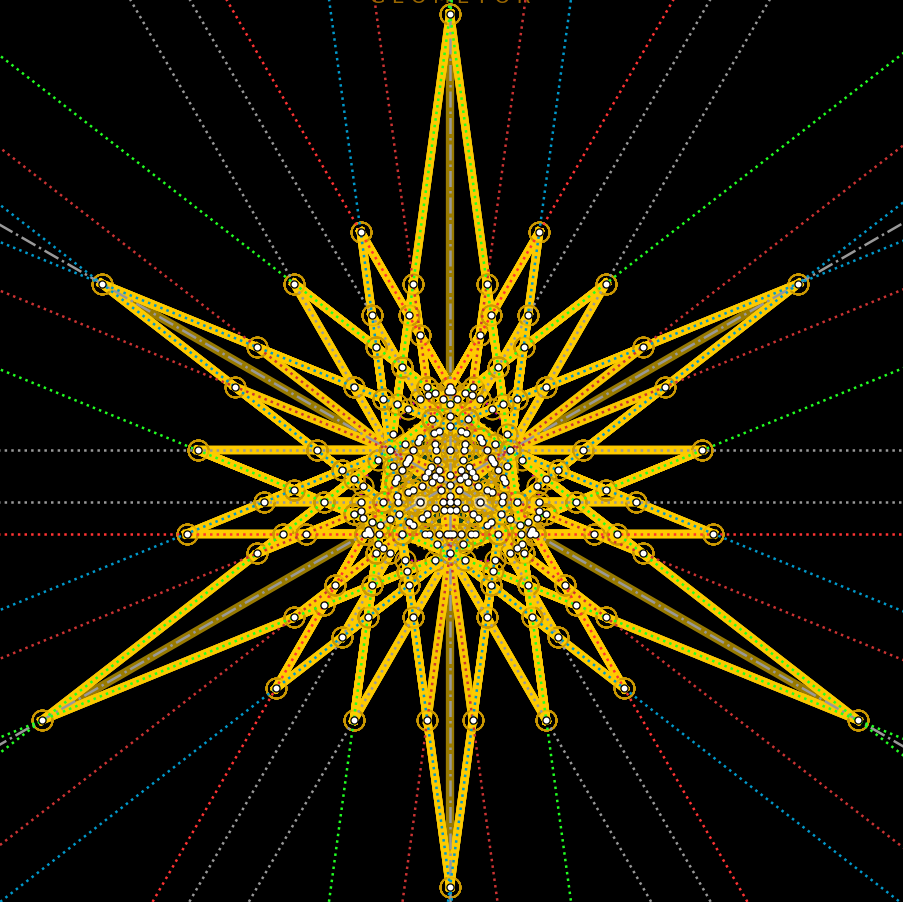
Plate 5 — Harmonic Pole & Polar Duality (Book III.37–40 [Props. 64–66]). From exterior pole T, tangents touch the conic at QQ defining the chord of contact (polar) QQ; every secant through T meets the conic in RR and the polar in M in harmonic cross-ratio .
Proposition 64 [III. 37–40] — Universal Harmonic Polar Theorem. If TQ, Tq be two tangents to any conic section (parabola, ellipse, single-branch or opposite-branch hyperbola) and any straight line drawn through T meet the conic in R, R and the chord of contact Qq in M (or conversely if M lie inside the conic on Qq and a secant through M meet the curve in RR and the parallel through T in N), the transversal is divided harmonically: