Book II: Asymptotes, Conjugate Hyperbolas & Secant Intercepts
Propositions 28–53 [Classical II. 1–53] — Apollonius of Perga (ed. T. L. Heath, 1896)
Book II constructs the asymptotes of the hyperbola and proves that they are shared identically by both opposite branches and by both conjugate hyperbolas. It demonstrates the bisected tangent property, the equality of outer secant intercepts, the asymptotic coordinate symptom , and provides complete ruler-and-compass constructions to recover the center, axes, and tangents of an arbitrary given conic curve.
Sections
1. Construction & Non-Meeting of the Asymptotes [Props. 28–29 / II. 1–2, 15, 17, 21]
Proposition 28 [II. 1, 15, 17, 21] — Construction of the Asymptotes. (1) If PP be a diameter of a hyperbola and the corresponding parameter, and if on the tangent at P there be set off on each side equal lengths PL, PL such that
then CL, CL produced from the center C will not meet the curve in any finite point and are accordingly defined as asymptotes. (2) The opposite branches have the same asymptotes. (3) Conjugate hyperbolas (having DD as transverse diameter and PP as secondary diameter) share the exact same asymptotes.
2. Secant Intercepts, Bisected Tangents & the Asymptotic Equation [Props. 30–35 / II. 3–16]
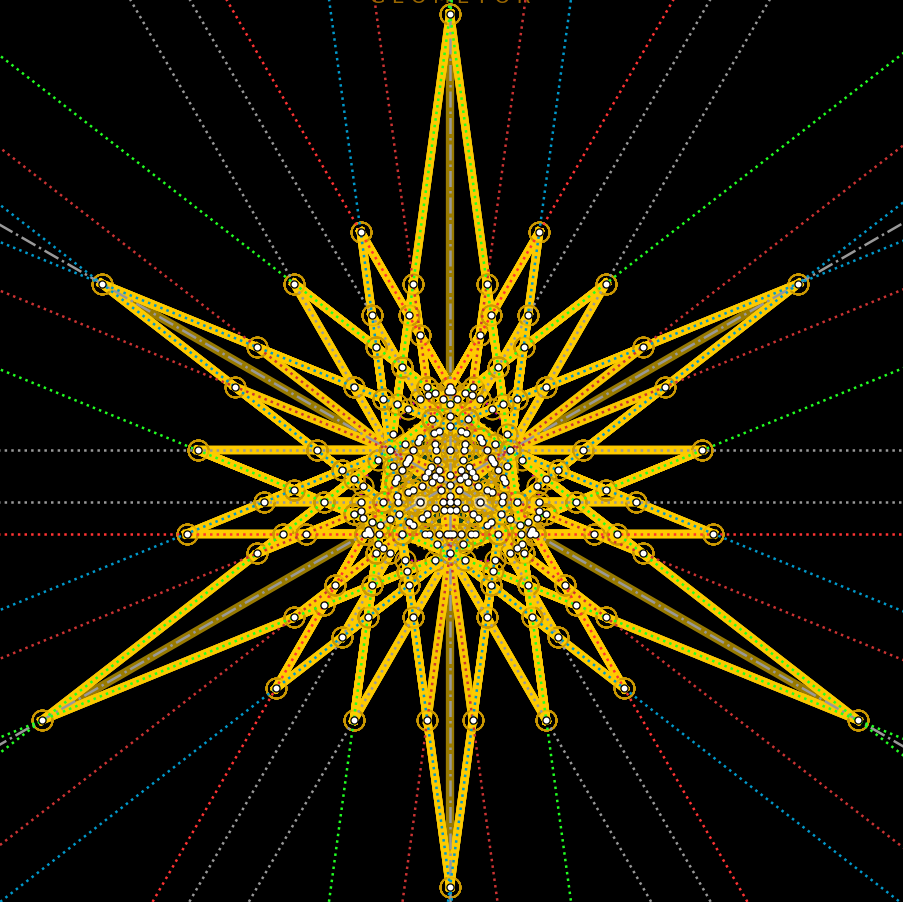
Plate 4 — Asymptotes, Conjugate Hyperbolas & Equal Secant Intercepts (Book II.1–21 [Props. 28–38]). Both conjugate hyperbolas share asymptotes CL, CL; any tangent segment LL between the asymptotes is bisected at its point of contact P; any secant meeting the hyperbola at QQ and the asymptotes at RR cuts off equal intercepts with .
3. Finding Diameters, Axes & Tangents by Compass and Straightedge [Props. 47–53 / II. 44–53]
In the closing chapters of Book II (II.44–53), Apollonius solves the fundamental problems of geometric recovery on a ready-drawn conic arc whose cone and parameters are unknown: