3. Tangents, Harmonic Division & Change of Diameter [Props. 12–27 / I. 33–60]
Apollonius establishes tangent lines without limits by proving that no straight line can fall between the tangent and the curve (extending [III.16]), and discovers that tangency is governed by harmonic division:
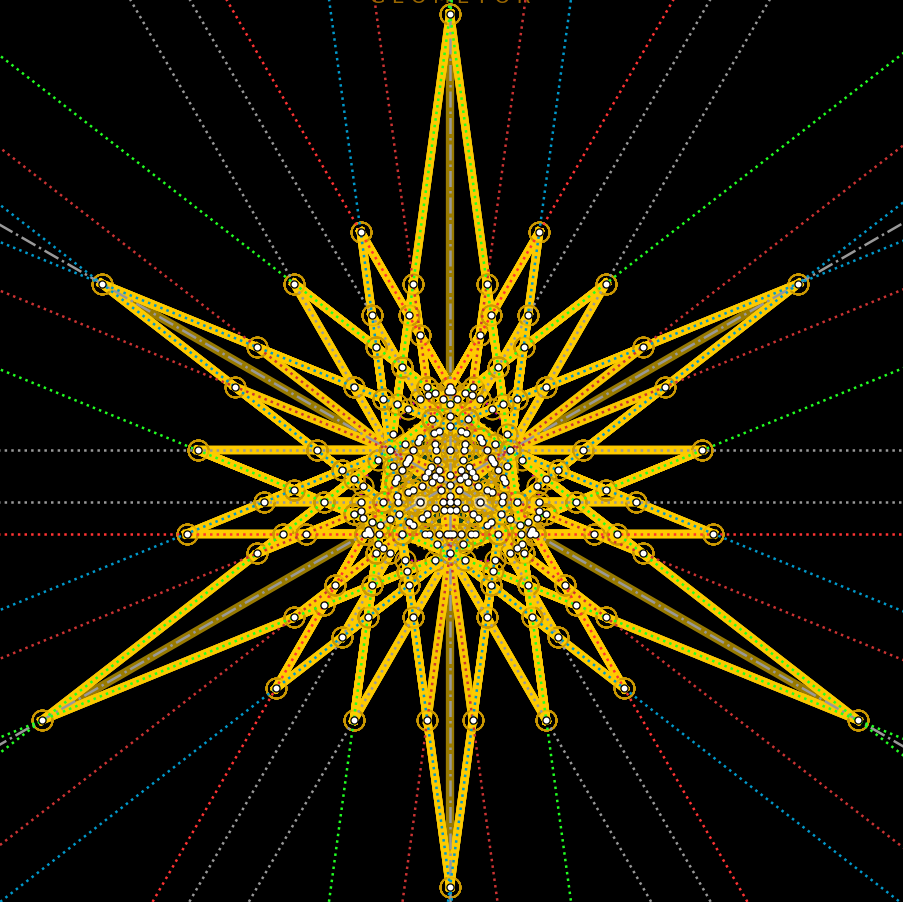
Plate 3 — Tangent & Harmonic Division (Book I.34, 36–37 [Props. 13–14]). On diameter PP with center C, the ordinate foot V of contact point Q and the tangent meet T divide the vertices PP harmonically: , equivalently .
Parabola Tangent Bisection [Prop. 12 / I. 33, 35]: If QV be an ordinate to diameter PV of a parabola and TPPV be set off outside the vertex P, then TQ touches the parabola, and conversely every tangent satisfies (subtangent equals twice the abscissa).
Central Conic Harmonic Tangent [Props. 13–14 / I. 34, 36, 37]: For a hyperbola, ellipse, or circle with diameter PP and center C, TQ is tangent at Q if and only if T and the ordinate foot V divide PP harmonically:
\[\frac{TP}{TP'} = \frac{PV}{VP'} \qquad \Longleftrightarrow \qquad CT \cdot CV = CP^2 \qquad \Longleftrightarrow \qquad CV \cdot VT = PV \cdot VP'.\]Reference to Any New Conjugate Diameter [Props. 20–21 / I. 49–51]: Using pure Euclidean quadrangle-area identities ([I.43]), Apollonius proves that if any point Q on a conic be taken as a new vertex, the diameter through Q and the tangent at Q form a new oblique coordinate frame in which the exact same area-application equation holds with a transformed parameter .