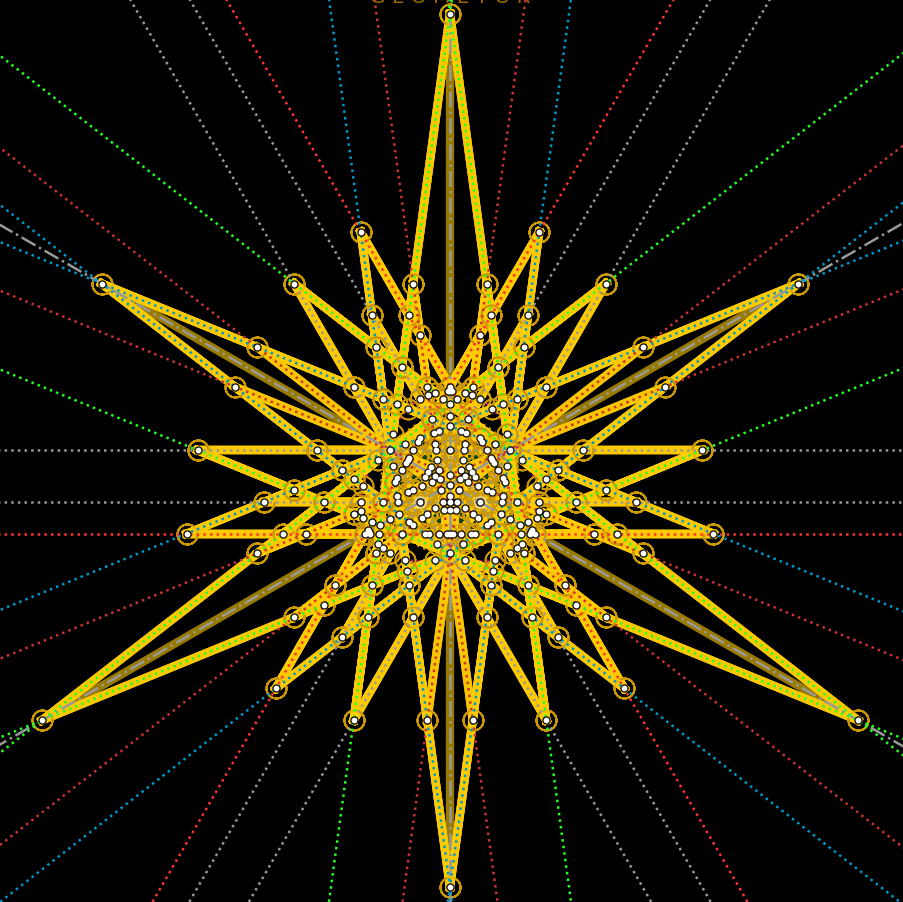
Chapter IV: On the Internal Form and Structure of the Cell — Notes & Concordance
Scholarly Apparatus & GEOMETOR Cross-References — Ch. IV
Scholarly Commentary & GEOMETOR Concordance (Chapter IV)
Lines of Force and Cytological Dynamics
Faraday–Maxwell Field Analogies: Thompson applies classical electromagnetic and hydrodynamic potential theory to cell division, illustrating how mechanical stresses in a fluid colloid produce configurations identical to optical and electrical field lines.
Critique of Mechanistic Cytology: Thompson argues that spindle fibers are not rigid solid skeletal threads, but transient lines of tension and molecular orientation within a dynamic colloidal sol-gel system.
Structured Concordance Loci in This Chapter
- Mitotic Spindle, Centrosomes, Karyokinetic Asters, and Colloidal Force Lines (Ch. IV (Internal Form and Structure of the Cell), pp. 156–200)
Models mitotic asters and spindle fibers as physical tension lines and dynamic potential fields within protoplasmic colloids. Algebraic Invariants:
Dynamic lines of force·Colloidal sol-gel tensiongeometor/aristotle (De Anima & Generation of Animals): Physical tension fields in protoplasm replace speculative entelechies in accounting for cellular division configurations.