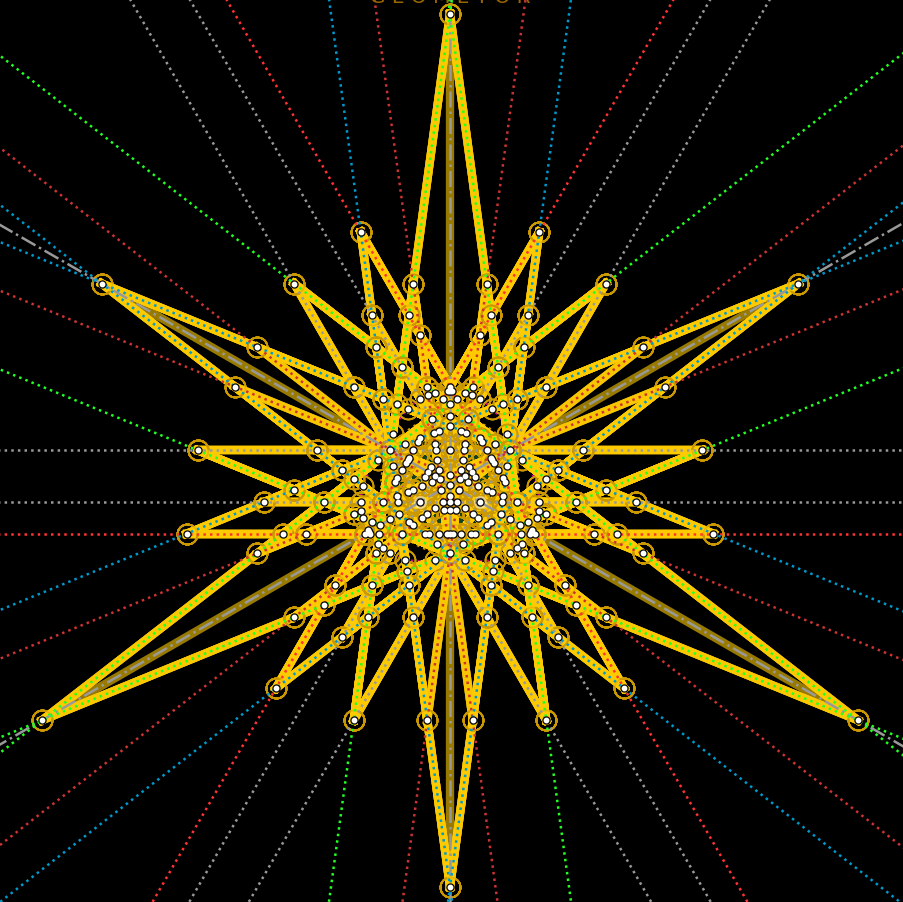
The Neoplatonic Academy of Athens
In the fifth century AD, the Platonic School of Athens—re-founded privately by Plutarch of Athens and led successively by Syrianus, Proclus, Marinus of Neapolis, Isidore, Hegias, and Damascius until Justinian’s edict of 529 AD—served as a vibrant sanctuary for Greek philosophy and the mathematical quadrivium.
Mathematics as the Bridge of the Soul
Following Plato’s Republic VII and Iamblichus’s De Communi Mathematica Scientia, the Athenian curriculum treated mathematics neither as empirical surveying nor as formal symbol-manipulation, but as the indispensable cathartic and anagogic bridge awakening the soul’s discursive reason (dianoia) from sensible images to pure intellectual contemplation (nous).
In seminar lectures on Euclid’s Elements, Syrianus and Proclus brought together three distinct streams of Greek thought that rarely met elsewhere:
Classical Academic & Peripatetic Epistemology: Plato’s Divided Line and Timaeus, Aristotle’s Posterior Analytics, and Eudemus of Rhodes’s History of Geometry.
Hellenistic Exact Science & Foundational Criticism: Euclid, Archimedes, Apollonius, Posidonius’s defense of Euclid against the Epicurean Zeno of Sidon, Geminus’s Theory of the Mathematical Sciences, Heron, and Claudius Ptolemy’s monograph on parallel lines.
Late-Antique Commentary Synthesis: Porphyry’s logical case-analyses and Pappus of Alexandria’s geometric insights—all woven by Proclus into a single philosophical architecture.