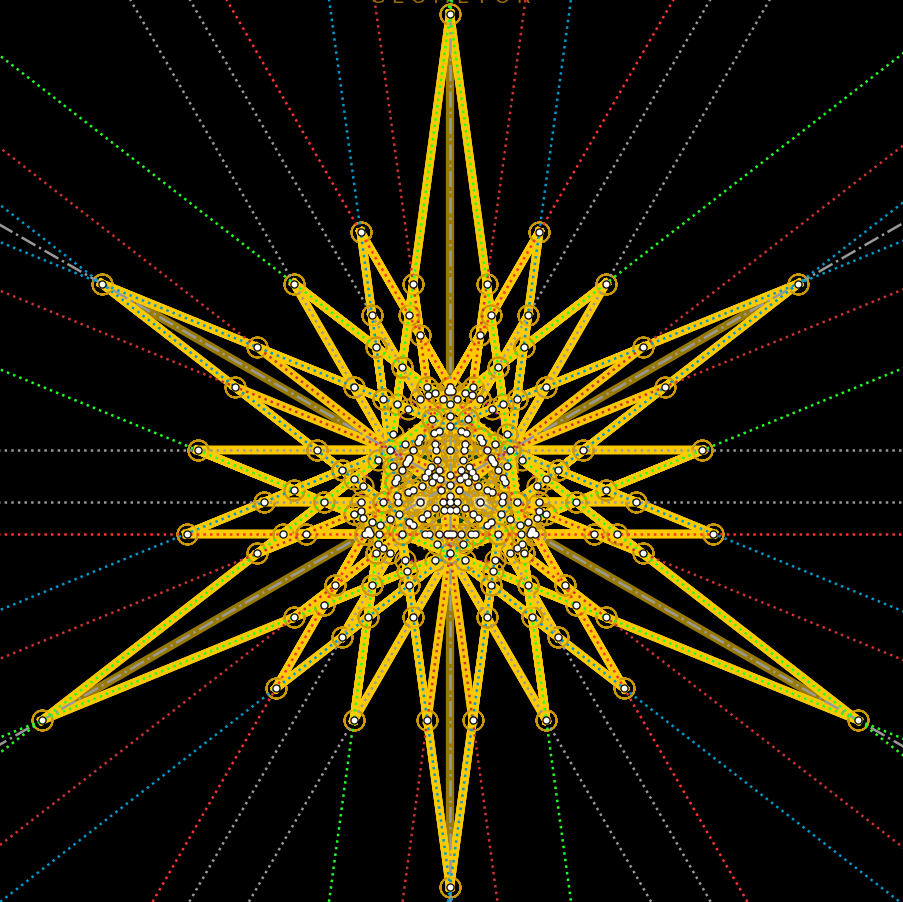
X(18) = 2nd NAPOLEON POINT
Trilinears
\(csc(A - π/6) : csc(B - π/6) : csc(C - π/6)\)
\(sec(A + π/3) : sec(B + π/3) : sec(C + π/3)\)
Barycentrics
\(a csc(A - π/6) : b csc(B - π/6) : c csc(C - π/6)\)
Notes
Let X,Y,Z be the centers of the equilateral triangles in the construction of X(14). The lines AX, BY, CZ concur in X(18).
If you have The Geometer’s Sketchpad, you can view 2nd Napoleon point. If you have GeoGebra, you can view 2nd Napoleon point.
X(18) lies on the Napoleon cubic and these lines: 2,61 3,14 4,16 5,13 6,17 12,202 15,140 76,302 83,623 203,499 275,470 298,636 624,634
X(18) is the {X(231),:ref:X(1209) <X(1209)>}-harmonic conjugate of X(17). For a list of other harmonic conjugates of X(18), click Tables at the top of this page.
X(18) = reflection of X(628) in X(630)
X(18) = isogonal conjugate of X(62)
X(18) = isotomic conjugate of X(303)
X(18) = complement of X(628)
X(18) = anticomplement of X(630)
X(18) = circumcircle-inverse of X(32628)
X(18) = X(i)-cross conjugate of X(j) for these (i,j): (15,13), (140,17), (398,4)
X(18) = polar conjugate of X(472)
X(18) = trilinear product of vertices of inner Napoleon triangle
X(18) = Kosnita(X(14),:ref:X(3) <X(3)>) point
X(18) = Cundy-Parry Phi transform of X(14)
X(18) = Cundy-Parry Psi transform of X(16)
X(18) = trilinear pole of line X(523)X(14447)
X(18) = X(63)-isoconjugate of X(10641)