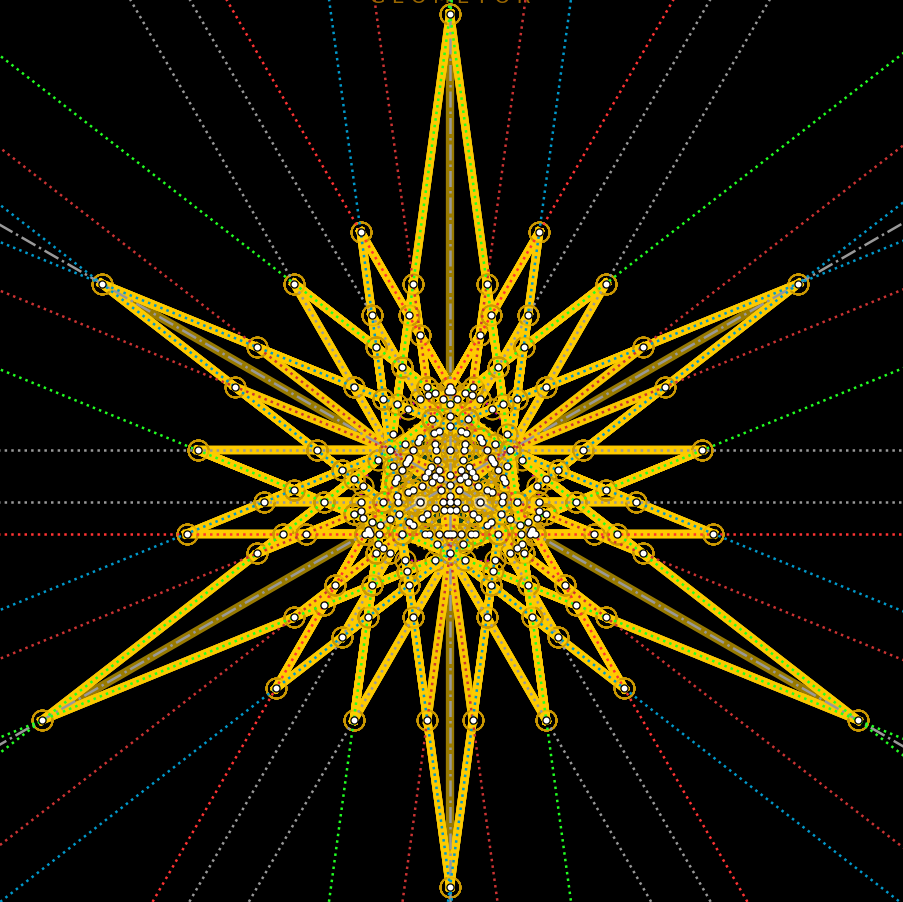
On the Soul III.6 — Structural Synopsis
Thematic Synopsis & Argument Progression · Bekker 430a26–431a1
Architectural Thesis
In De Anima III.3–8 (427a17–432a14), Aristotle unveils the cognitive psychology that makes geometry possible for an embodied intellect: distinguishing imagination from both sensation and judgment, distinguishing receptive and active intellect, explaining how the mind thinks undivided continuous lengths and indivisible boundaries (430b6–20), and establishing the canonical law that the soul never thinks without a phantasm (431a16, 432a8) and thinks mathematicals (ta ex aphaireseōs, 431b12–17) within imaginative forms.
Logical & Noetic Progression
De Anima III.6 (430a26–431a1) — Thinking of Indivisibles, Undivided Length & Point
Explains how the mind thinks an actually undivided line segment (μῆκος ἀδιαίρετον ἐνεργείᾳ) in an undivided time, whereas a point and every division are made known like privation (ὥσπερ ἡ στέρησις, 430b20–21).
Chapter Conspectus
Treatise & Chapter |
Bekker Span |
Thematic Scope |
Tracks |
|---|---|---|---|
De Anima III.6 |
|
Thinking of Indivisibles: Undivided Length & Point/Division |
Reception Snapshot in the GEOMETOR Canon
This chapter encompasses 2 distinct Bekker loci cited across geometor/euclid, geometor/hoenen, and geometor/pacioli. See the companion Critical Notes & Dual Commentary and the master Bekker Concordance for full folio and page back-references.