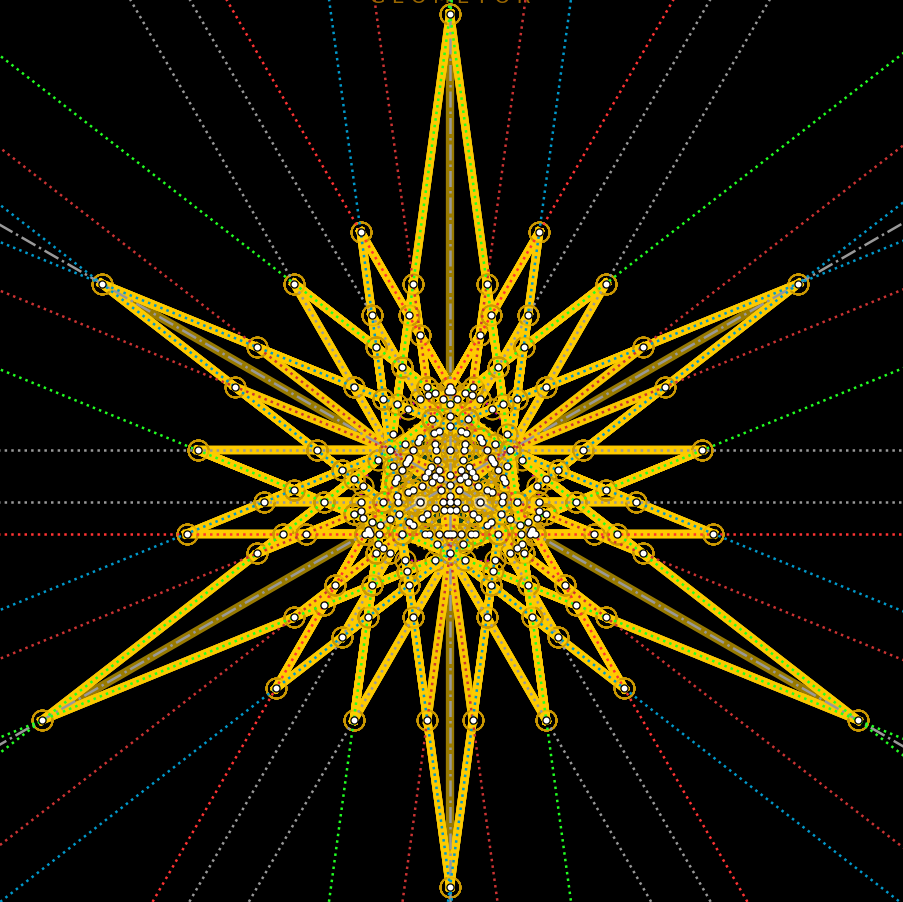
Posterior Analytics I.5 — Structural Synopsis
Thematic Synopsis & Argument Progression · Bekker 74a4–74b4
Architectural Thesis
In Analytica Posteriora I.1–13 (71a1–79a16), Aristotle constructs the first rigorous meta-theory of deductive mathematical science (epistēmē). Answering Plato's Meno paradox (71a29; Meno 80d), Aristotle demonstrates that all intellectual teaching proceeds from pre-existent knowledge of two irreducible kinds—comprehension of meaning (ti sēmainei) and grasp of existence (hoti estin)—and classifies the indemonstrable starting points of geometry into definitions, hypotheses, postulates, and common axioms.
Logical & Noetic Progression
I.4–6 (73a21–75a37) — Essential (Kath’ Hauto) & Commensurate Universal (Katholou)
Defines the three criteria of commensurate universality: holding of all (kata pantos), essentially (kath' hauto), and qua the subject itself (hēi auto). Illustrates failure of commensurate universality when 2R is proved separately of equilateral, isosceles, and scalene triangles rather than triangle qua triangle (74a25–32), and celebrates Eudoxus's general proof of alternating proportion (74a17–25).
Chapter Conspectus
Treatise & Chapter |
Bekker Span |
Thematic Scope |
Tracks |
|---|---|---|---|
Analytica Posteriora I.5 |
|
Errors in Attaining the Commensurate Universal (Triangle 2R & Alternating Proportion) |
Reception Snapshot in the GEOMETOR Canon
This chapter encompasses 3 distinct Bekker loci cited across geometor/euclid, geometor/hoenen, and geometor/pacioli. See the companion Critical Notes & Dual Commentary and the master Bekker Concordance for full folio and page back-references.